History of (tagg)Art...
HomeNatureIdentityRenaissanceBaroque

Nature

  • All Nature artworks
  • Landscape or Seascape in 2D
  • Animals in 2D or 3D
  • The Elements (Fire, Water, Wind or Earth) in 2D or 3D
  • +3 more topics

Identity

  • All Identity artworks
  • The Divine in 2D or 3D Works
  • Portraits in 2D Works
  • Portraits in 3D Works
  • +3 more topics

Renaissance

  • All Renaissance artworks
  • Religious Painting
  • Religious Sculpture
  • Mythological in 2D or 3D
  • +3 more topics

Baroque

  • All Baroque artworks
  • Religious Painting
  • Religious Sculpture
  • Mythological Painting
  • +6 more topics

About

A comprehensive study resource for Pearson Edexcel History of Art A-Level.

NatureIdentityRenaissanceBaroque

History of (tagg)Art... - A-Level Study Resource

Pearson Edexcel Specification

Admin
  1. Home
  2. Identity
  3. Funeral Monument of the Duke of Marlborough

Funeral Monument of the Duke of Marlborough

John Michael Rysbrack, 1733
IdentityPortraits in 3D WorksPre-1850
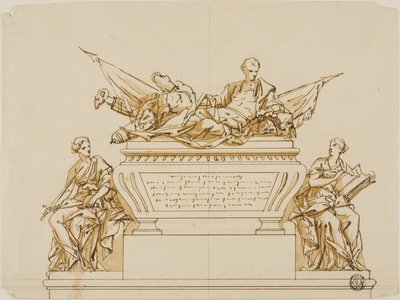
Funeral Monument of the Duke of Marlborough by John Michael Rysbrack
Funeral Monument of the Duke of Marlborough, John Michael Rysbrack (designed by William Kent), c. 1733, marble, Chapel of Blenheim Palace, Oxfordshire

Overview

About This Work

The Funeral Monument to the 1st Duke of Marlborough (c. 1733) is one of the most grandiose and politically significant sculptural ensembles in Britain. Located in the chapel of Blenheim Palace, Oxfordshire, it commemorates John Churchill, 1st Duke of Marlborough (1650–1722), the military commander who defeated the French armies of Louis XIV at the Battle of Blenheim (1704). The monument was commissioned by his formidable widow, Sarah, Duchess of Marlborough, who was determined to secure her husband's legacy against his political enemies. It was designed by the architect William Kent but sculpted by the Flemish artist John Michael Rysbrack (1694–1770), the leading sculptor in England at the time. The monument is a massive pyramidal structure in white, grey, and black marble, depicting the Duke and Duchess with their two sons (both of whom died young) and allegorical figures of History and Fame. It represents the apex of the English Baroque style in sculpture—theatrical, dynastic, and explicitly propagandistic—asserting the Duke's status not just as a national hero, but as a figure of near-imperial Roman grandeur.

Visual Analysis

Composition

The Pyramidal Structure: The entire composition is contained within a massive pyramidal outline (a grey marble obelisk backdrop). This shape provides stability and monumentality, directing the eye upward to the apex. The pyramid was a traditional symbol of eternity and immortality in funerary art. The Apotheosis of the Duke: At the summit stands the Duke himself, dressed not in contemporary 18th-century uniform but in Roman imperial armour. This "all'antica" (in the ancient style) dress elevates him above specific time, presenting him as a timeless hero comparable to Julius Caesar or Alexander the Great. He holds a baton of command and stands with an imperious, triumphant posture. The Role of the Duchess: Crucially, the Duchess (Sarah) is depicted still living. She sits to the Duke's left, slightly lower, gazing up at him with adoration and mourning. She presents their son (who died of smallpox) to him. This inclusion of the living widow is highly unusual and theatrical—she is effectively staging her own grief and loyalty for eternity. Allegorical Figures: • History: A winged figure (History) sits on one side, writing the Duke's deeds in a book. • Fame: Another winged figure (Fame) blows a trumpet to proclaim his glory. • Envy Crushed: At the very base of the sarcophagus, a hideous, crushed dragon represents Envy (or Detraction). This is a direct reference to the Duke's political enemies (the Tories) who had accused him of corruption. The monument visually asserts that his glory has crushed their lies.

Colour & Light

Polychrome Marble: Rysbrack uses contrasting marbles to create visual hierarchy. The figures are in pristine white statuary marble; the sarcophagus is black marble; the background pyramid is grey/veined marble. This colour contrast (polychromy) enhances the legibility of the complex group and adds to the richness of the effect.

Materials & Technique

Rysbrack's Virtuosity: Rysbrack was famous for his ability to carve different textures. The hard sheen of the Duke's armour contrasts with the soft, flowing drapery of the Duchess's robes and the feathered wings of Fame. The detailing is crisp and confident, characteristic of his Flemish Baroque training. The Relief Panel: On the front of the sarcophagus is a relief carving depicting the Surrender of Marshal Tallard (the French commander) to Marlborough at the Battle of Blenheim. This provides the specific historical evidence for the Duke's glory, grounding the allegorical figures in actual military fact.

Historical Context

Context

The War of the Spanish Succession (1701–1714): The Duke of Marlborough was the commander of the Allied forces (Britain, Holland, Austria) against France. His victories at Blenheim, Ramillies, Oudenarde, and Malplaquet broke the power of Louis XIV and established Britain as a major European power. The monument is a celebration of this victory. Political Disgrace and Rehabilitation: Despite his victories, Marlborough was dismissed from command in 1711 by the Tory government on charges of embezzlement (charges largely manufactured by his enemies). He went into exile. After George I took the throne in 1714, he was restored to favour. The monument, commissioned after his death in 1722, is a final, permanent rebuttal to his critics—a statement in stone that he was a hero, not a criminal. Blenheim Palace: The palace itself was a gift from the nation to the Duke, but the funding was stopped by the Tories, forcing the Marlboroughs to pay for much of it themselves. The Chapel monument is the emotional heart of this vast complex—the shrine to the man who built it. Sarah Churchill's Agency: The Duchess was one of the most powerful women in British history. She micromanaged the monument's creation, rejecting earlier designs and insisting on Rysbrack (whom she considered the best). The monument is as much a testament to her will and devotion as to the Duke's deeds.

Key Themes

Power and Propaganda

Roman Imperial Imagery: By dressing the Duke as a Roman general, the monument links British power to Roman imperial power. It suggests that Britain is the new Rome—an empire of liberty and military strength. This visual language became standard for British military heroes (later used for Nelson and Wellington). Dynastic Ambition: The inclusion of the Duke's two sons (who both died young, ending the direct male line) is poignant. It memorializes the tragedy of the Churchill dynasty—despite all his glory, he had no male heir to inherit the title (it passed to his daughter). The monument preserves the memory of the "lost heirs." Victory over Envy: The crushed dragon of Envy is not a subtle symbol. It tells the viewer that true greatness will always be attacked by "envy" (political opposition), but that history (the writing figure) will vindicate the hero. It is a highly partisan political statement carved in marble.

Exam Focus Points

Critical Perspectives

Kent vs. Rysbrack: The design is by William Kent (painter/architect), but the execution is by Rysbrack. Kent provided the theatrical concept (the pyramid, the grouping); Rysbrack provided the sculptural quality. This collaboration between architect and sculptor was typical of 18th-century monumental art. Baroque vs. Neoclassical: The monument stands on the cusp of styles. It has the drama, movement, and allegorical complexity of the Baroque (Bernini-esque). However, the Roman dress and the restraint of the figures point toward the coming Neoclassical style. Rysbrack is often credited with introducing a more classical, restrained style to England compared to the earlier, fussier Baroque. The Duchess's Gaze: Pay attention to the Duchess's face. She is not weeping hysterically but looks at the Duke with intense, focused adoration. It is a portrait of a specific relationship—a partnership of equals. She is not just a mourner; she is the guardian of his flame. Comparison to Roubiliac: Compare Rysbrack to his great rival Louis-François Roubiliac. Roubiliac's monuments (e.g., to the Duke of Argyll in Westminster Abbey) are often more dynamic, with figures caught in momentary action. Rysbrack's Marlborough is more static, dignified, and monumental—perhaps fitting for a figure of such immense national weight.

On this page

OverviewVisual AnalysisHistorical ContextKey ThemesExam Focus Points