History of (tagg)Art...
HomeNatureIdentityRenaissanceBaroque

Nature

  • All Nature artworks
  • Landscape or Seascape in 2D
  • Animals in 2D or 3D
  • The Elements (Fire, Water, Wind or Earth) in 2D or 3D
  • +3 more topics

Identity

  • All Identity artworks
  • The Divine in 2D or 3D Works
  • Portraits in 2D Works
  • Portraits in 3D Works
  • +3 more topics

Renaissance

  • All Renaissance artworks
  • Religious Painting
  • Religious Sculpture
  • Mythological in 2D or 3D
  • +3 more topics

Baroque

  • All Baroque artworks
  • Religious Painting
  • Religious Sculpture
  • Mythological Painting
  • +6 more topics

About

A comprehensive study resource for Pearson Edexcel History of Art A-Level.

NatureIdentityRenaissanceBaroque

History of (tagg)Art... - A-Level Study Resource

Pearson Edexcel Specification

Admin
  1. Home
  2. Baroque
  3. Vaux-le-Vicomte

Vaux-le-Vicomte

Louis Le Vau, 1658-1661
BaroqueSecular ArchitectureNon-Italian Artists
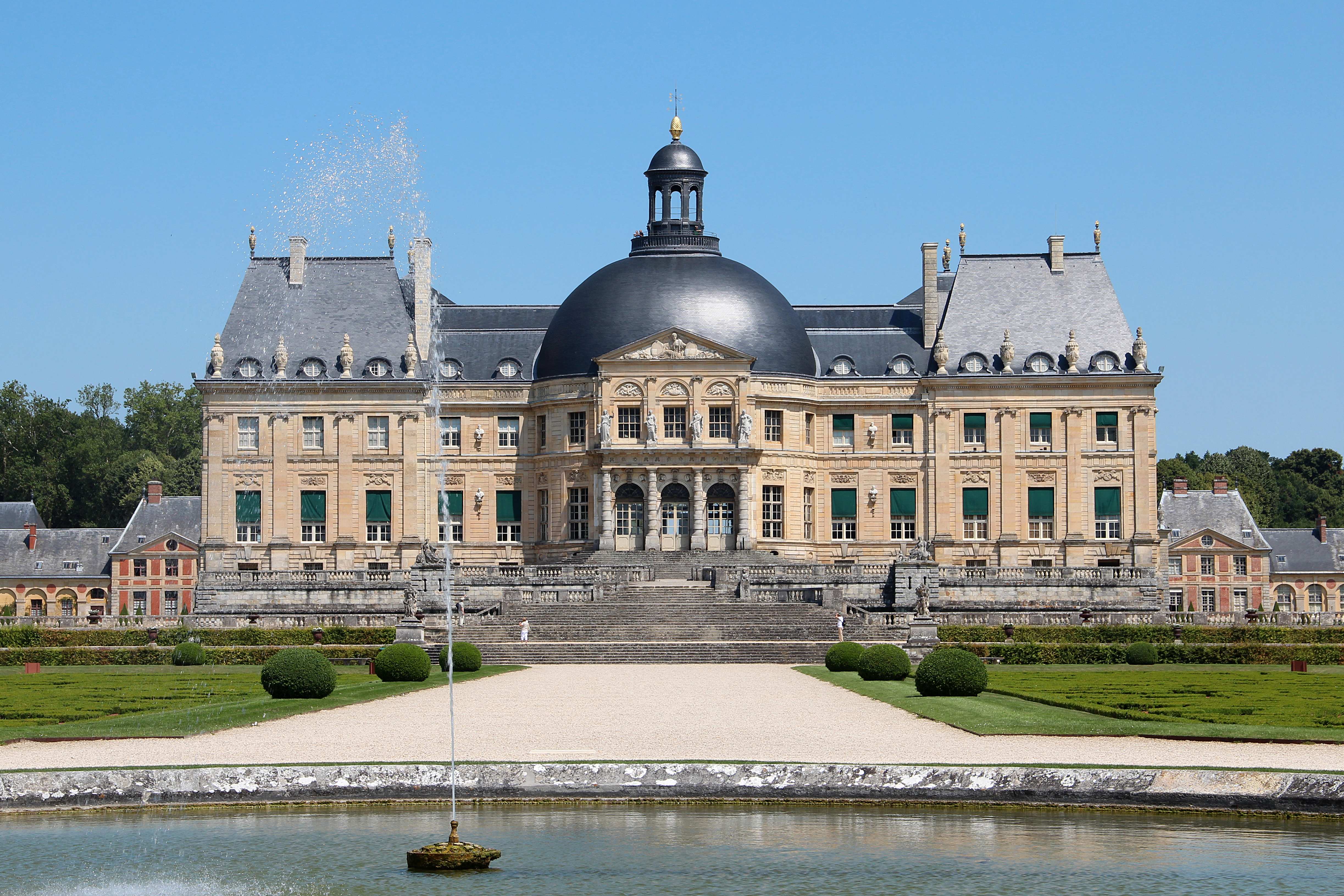
Vaux-le-Vicomte by Louis Le Vau
Château de Vaux-le-Vicomte (1658-1661), Louis Le Vau with gardens by André Le Nôtre, near Melun, France. View from the garden showing the central dome, formal parterres, and reflecting pool.

Overview

About This Work

Built between 1658 and 1661 for Nicolas Fouquet, Marquis de Belle-Île and Superintendent of Finances to Louis XIV, the Château de Vaux-le-Vicomte represents one of the most consequential architectural achievements of the seventeenth century. Designed by Louis Le Vau (1612–1670), with gardens by André Le Nôtre (1613–1700) and interior decoration by Charles Le Brun (1619–1690), the château and its gardens exemplify the revolutionary synthesis of architecture, garden design, and interior decoration that would define French Baroque classicism and establish a model for all subsequent grand palace design in Europe. The château employs an innovative U-shaped plan with a central domed oval salon that rises through two stories, presenting a revolutionary spatial concept that subordinates lateral wings to a grand central axial vista extending into the carefully orchestrated garden landscape. Le Nôtre's garden—stretching nearly 1.5 kilometers along a central axis and occupying 33 hectares—represents the seminal expression of the jardin à la française (French formal garden), employing sophisticated optical illusions, forced perspective, and hydraulic engineering to create an impression of infinite space extending from the château's terraces. Built with extraordinary expense (estimated at 16 million livres and employing 18,000 workers), the château was completed in 1661 to house an elaborate fête given by Fouquet to celebrate its completion. Yet three weeks later, Fouquet was arrested on charges of embezzlement—Louis XIV, reportedly envious of the château's magnificence and alarmed by Fouquet's independent power base, orchestrated the minister's imprisonment for the rest of his life. The king subsequently commandeered the château's architects—Le Vau, Le Nôtre, and Le Brun—to create Versailles, directly employing the innovations developed at Vaux-le-Vicomte on an even grander scale.

Visual Analysis

Composition

Le Vau's most significant innovation was the creation of a monumental central salon rising through two stories beneath an oval dome—what architects termed a "salon à l'italienne" (Italian-style vaulted room). This oval form, inspired by contemporary Roman architecture (particularly the work of Bernini and Cortona), represented a dramatic departure from French architectural tradition. The salon rises 12 metres and is crowned by an elliptical dome that creates what contemporary observers called "an unprecedented theatrical effect." Le Vau organized the château in a U-shaped plan with the open side facing the gardens, creating fundamental permeability: the interior visually extends into the landscape, making the distinction between interior and exterior fluid rather than rigid. The wings of the U are articulated with pavilions, creating visual rhythm—the eye reads the façade as a series of articulated elements rather than as an undifferentiated wall.

Colour & Light

The château employs cream-coloured stone that catches light beautifully and creates a sense of warmth. The lower level features rusticated stonework (rough, textured blocks) that visually anchors the building and suggests strength; the upper levels employ smooth ashlar (finished stone), creating a lighter visual effect. This graduated treatment—rough below, smooth above—creates an impression of structural logic even though the rustication is largely decorative. The dome's smooth slate-covered surface catches changing light throughout the day, creating subtle chromatic variations. The interior spatial sequence employs carefully orchestrated light: entering from the forecourt through the vestibule (relatively tight, compressed), ascending the grand staircase (which opens the space vertically), then encountering the double-height oval salon crowned by the vault—the spatial climax bathed in light from the garden-side windows.

Materials & Technique

Le Nôtre's fundamental innovation was the creation of a dominant central axis extending from the château's southern terrace for nearly 1.5 kilometers, employing laws of optical perspective to create the impression of infinite recession. The eye perceives the garden as diminishing in size and detail with distance, creating the impression that the space extends far beyond its actual dimensions. Le Nôtre further enhanced this effect through clever manipulation of terrain: the canal is placed at the lowest point, hidden from the primary viewing point; beyond the canal, the landscape ascends gradually, making distant elements appear closer. Immediately adjacent to the château, elaborate parterres de broderie (embroidered parterres)—complex geometric patterns of clipped boxwood edging beds of flowers, coloured sand, or grass—are visible as complete designs only from the upper windows or from the air. The water features represent extraordinary technical achievement: large canals, reflecting pools, fountains, and cascades punctuate the axial vista, reflect sky and architecture, and function as mechanical engineering achievements with elaborate pumping systems.

Historical Context

Context

Nicolas Fouquet (1615–1680) served as Superintendent of Finances under Louis XIV beginning in 1656, controlling the royal treasury and possessing considerable independent authority and wealth. The commission of Vaux-le-Vicomte represented an assertion of Fouquet's magnificence and power, yet this very magnificence proved his downfall: Louis XIV, increasingly centralizing royal authority, viewed Fouquet's château as a threat. Fouquet hosted an elaborate inauguration fête on August 17, 1661, featuring theatrical performances, elaborate suppers, and fireworks to showcase the château's magnificence to Louis XIV and the assembled court. Three weeks later, Fouquet was arrested by musketeer commander D'Artagnan on charges of embezzlement. Tried in a lengthy process, he was condemned to life imprisonment in the fortress of Pignerol, where he remained until his death in 1680, never seeing his beloved château again. Louis XIV immediately commandeered Le Vau, Le Nôtre, and Le Brun to expand the royal hunting lodge at Versailles, where they applied and magnified the innovations developed at Vaux-le-Vicomte.

Key Themes

The Synthesis of Arts and French Baroque Classicism

Vaux-le-Vicomte represents the Baroque ideal of the Gesamtkunstwerk—the total artwork integrating multiple media into unified expression. Architecture (Le Vau), landscape design (Le Nôtre), and interior decoration (Le Brun) are intimately coordinated; the garden is not merely ornamental accompaniment but forms a unified composition with the château, each giving meaning to the other. The château represents a synthesis of Italian Baroque innovations (the oval salon, sculptural plasticity, dramatic spatial effects) with French classical restraint (symmetrical composition, controlled proportions, rational organization). This synthesis—often termed "French Baroque classicism"—proved extraordinarily influential, establishing an aesthetic that would define French architecture for the next century. Vaux-le-Vicomte also marked the first time that a landscape architect had been given complete authority over an entire garden project, establishing landscape design as a distinct art form equal to architecture. The château's tragic political dimension reveals tensions inherent in seventeenth-century French politics: the king sought to monopolize magnificence and subordinate all noble power to his own; any rival's assertion of grandeur became a threat to be eliminated.

Exam Focus Points

Critical Perspectives

Vaux-le-Vicomte functioned as the prototype for Versailles—Le Vau's architectural innovations (the central domed salon, U-shaped plan, integration of interior and landscape) and Le Nôtre's garden principles (central axis, forced perspective, integration of parterres and water features) were transferred directly and magnified to unprecedented scale. Many architectural historians prefer Vaux-le-Vicomte to Versailles, arguing that its scale is more human, its proportions more elegant, and its integration of architecture and landscape more coherent than Versailles's grandeur. This collaborative model—architect, landscape designer, and decorator working from inception as equals—became canonical and was directly copied at Versailles. The arrest of Fouquet and commandeering of his architects demonstrates the political dimensions of art patronage: architectural innovations developed for aristocratic patrons could be appropriated by the king for greater glory. Le Nôtre's systematic deployment of optical perspective principles to create spatial illusions represents landscape-scale illusionism equivalent to ceiling fresco painting—the transformation of actual space through perceptual manipulation.

On this page

OverviewVisual AnalysisHistorical ContextKey ThemesExam Focus Points