Palazzo Barberini
Carlo Maderno et al, 1625-1631
Overview
About This Work
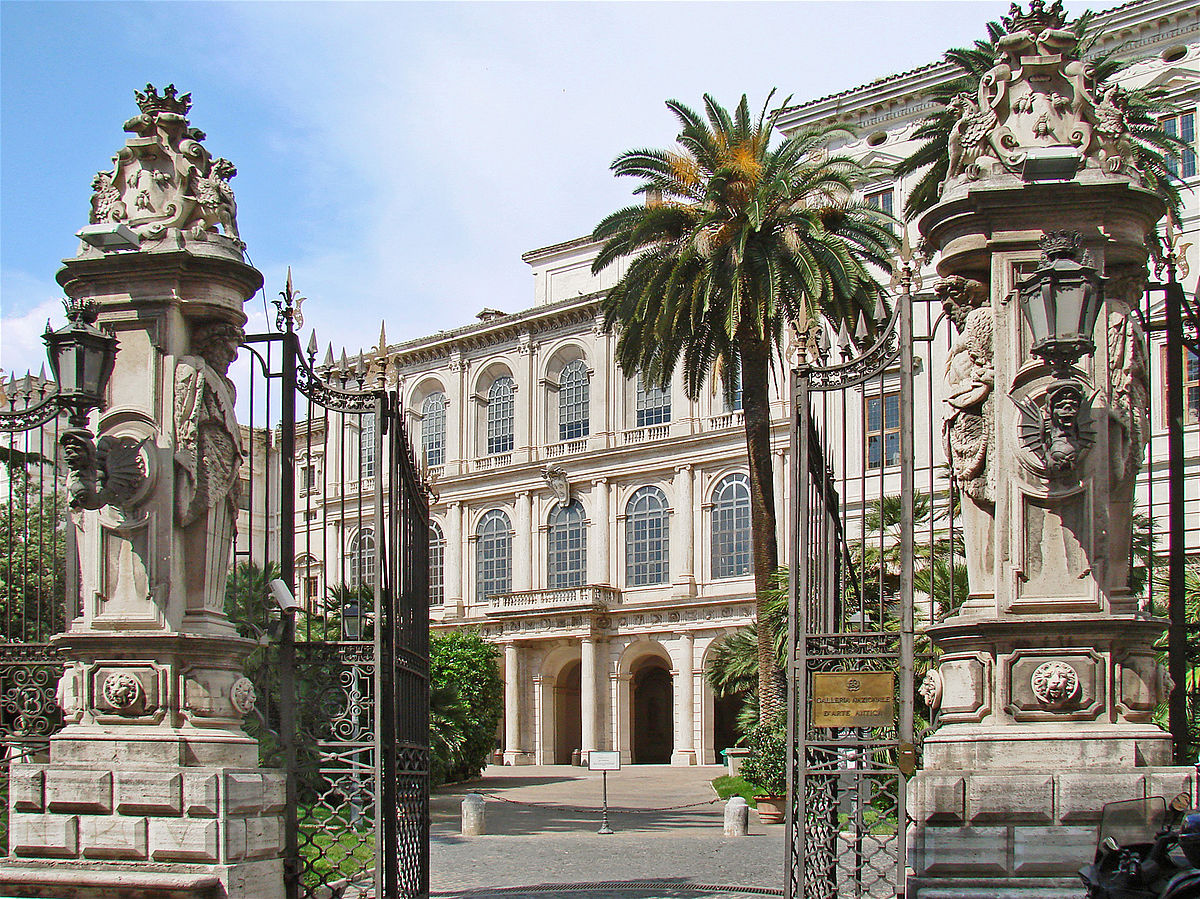
Constructed between 1625 and 1633, Palazzo Barberini represents the supreme achievement of Baroque palatial architecture and exemplifies the collaborative genius of three of the greatest architects of the seventeenth century: Carlo Maderno (1556–1629), Gian Lorenzo Bernini (1598–1680), and Francesco Borromini (1599–1667). Built for Pope Urban VIII (Maffeo Barberini) as the residence of his family on Rome's Quirinal Hill, the palace transforms a modest Renaissance villa (the Palazzo Sforza) into a monumental urban palace that asserts papal and familial authority while synthesizing both urban grandeur and suburban villa openness. The design employs an innovative H-shaped plan, combining two parallel wings connected by a grand central hall that extends through two stories and culminates in Pietro da Cortona's revolutionary 400-square-meter ceiling fresco, Allegory of Divine Providence and Barberini Power (1632–1639), which transforms the vault into a swirling celestial theatre depicting the spiritual and temporal glory of the Barberini family. The palace features two contrasting staircases that epitomize the architectural rivalry between Bernini and Borromini: Bernini's grand square staircase exemplifies classical monumentality and sculptural plasticity, while Borromini's elliptical helicoidal staircase represents radical geometric innovation and mathematical abstraction. The façade, designed by Maderno, employs Venetian-influenced arcaded windows and three superimposed classical orders, presenting a theatrical yet controlled composition that integrates the palace into Rome's urban fabric while asserting its princely preeminence. Palazzo Barberini represents the apotheosis of Counter-Reformation palatial culture: it functions simultaneously as a symbol of papal power, a showcase for artistic patronage, a site of political and cultural authority, and a model for subsequent Baroque and Rococo palace architecture throughout Europe.