Turkey
Giambologna, 1567
Overview
About This Work
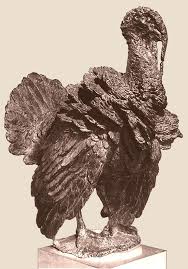
Turkey (1567) is a life-size bronze sculpture by Giambologna (Giovanni Bologna), the Flemish-born master of Mannerist sculpture who dominated late-16th-century Florence. Measuring approximately 62 x 50 cm, it was commissioned by Francesco I de' Medici to be installed in the artificial grotto of his villa at Castello, where it was displayed among volcanic rocks alongside other bronze birds including a peacock, an eagle, and an owl. The sculpture now rests in the Museo Nazionale del Bargello in Florence. The turkey itself was an exotic novelty—a bird native to the Americas that had only recently arrived in Europe (c. 1519) and was still regarded as a bizarre and precious luxury object by European nobility. Giambologna's bronze turkey represents a startling departure from traditional sculpture: rather than depicting classical mythology or human heroism, it elevates a domestic bird to monumental scale and technical virtuosity. The work exemplifies Mannerism—an artistic style emphasizing artifice, technical facility (sprezzatura), and the deliberate integration of art with nature. Through its naturalistic yet stylized rendering, Turkey encapsulates Renaissance court culture's fascination with the exotic, the scientific observation of nature, and the artist's power to rival or exceed nature's own creations.