Apollo served by the Nymphs
François Girardon, 1666-1675
Overview
About This Work
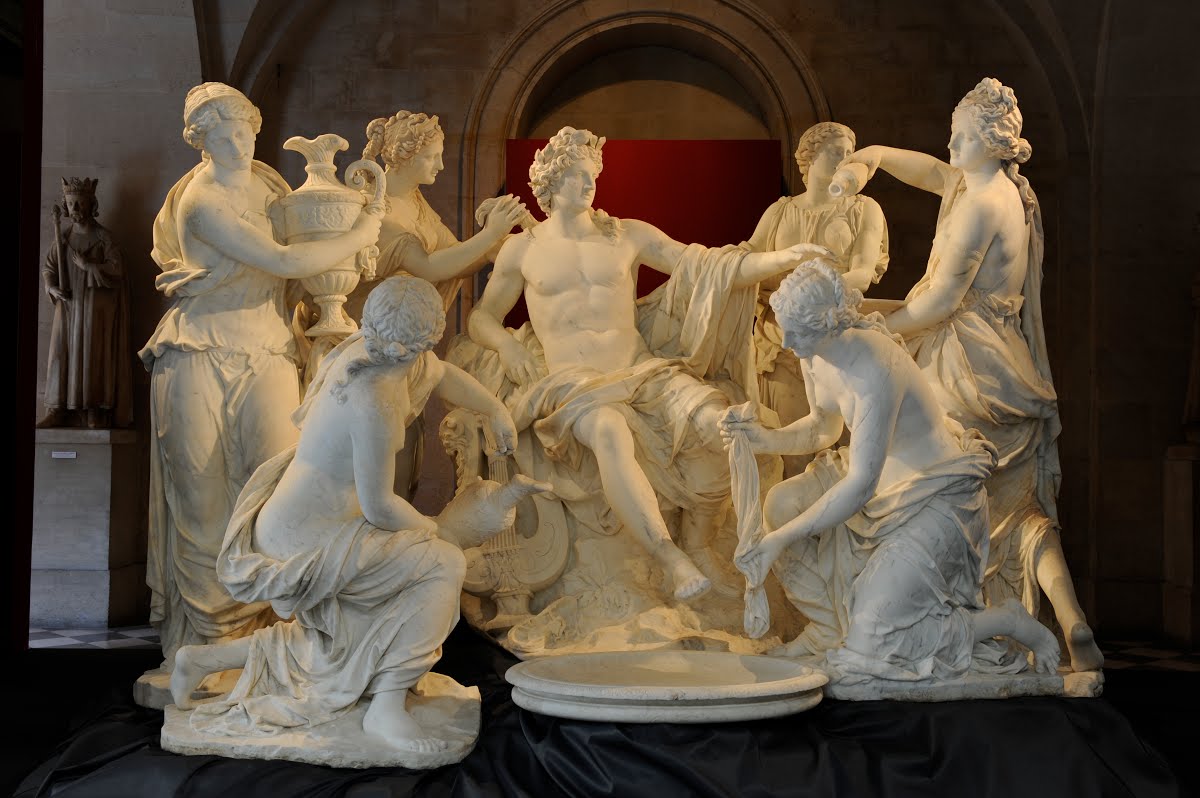
Created between 1666 and 1675, Apollo Served by the Nymphs is a monumental sculptural group composed of seven separate marble figures, conceived and directed by François Girardon (1628–1715) in collaboration with sculptor Thomas Regnaudin (1622–1706), originally installed in the Grotto of Tethys at the Palace of Versailles. The work represents the god Apollo, exhausted after his celestial labours of illuminating the world, being attended, bathed, and perfumed by six nymphs who serve as his ministers and companions. The figure of Apollo himself, inspired directly by the classical Apollo Belvedere of antiquity, stands in a posture of serene repose, his idealized nude form displaying complete mastery of human anatomy rendered in marble. The surrounding nymphs, arranged in a carefully orchestrated compositional choreography, display varying degrees of classical refinement—some partially nude, others draped in sumptuous fabrics, each attending to a specific aspect of the god's ablution and toilette. The sculpture exemplifies the apotheosis of French Baroque classicism: a synthesis of Hellenistic sculpture (through direct inspiration from ancient precedents), Counter-Reformation theological restraint (in the avoidance of explicit sensuality), Baroque dramatic energy (in the orchestration of multiple figures), and French courtly elegance (in the refined proportions and harmonious compositional balance). Commissioned by Louis XIV as part of his comprehensive allegorical program decorating the gardens of Versailles, the Apollo Served by the Nymphs functioned as a visual assertion of royal power and divine sanction: the Sun King, identifying himself with Apollo, asserted that his absolute authority paralleled the god's cosmic dominion over light, order, and the arts. Girardon's masterpiece established a new sculptural paradigm—the unified, multi-figure compositional group treating a single narrative moment—that would influence European sculpture for the next century.