The Rape of Proserpina
Gianlorenzo Bernini, 1621-1622
Overview
About This Work
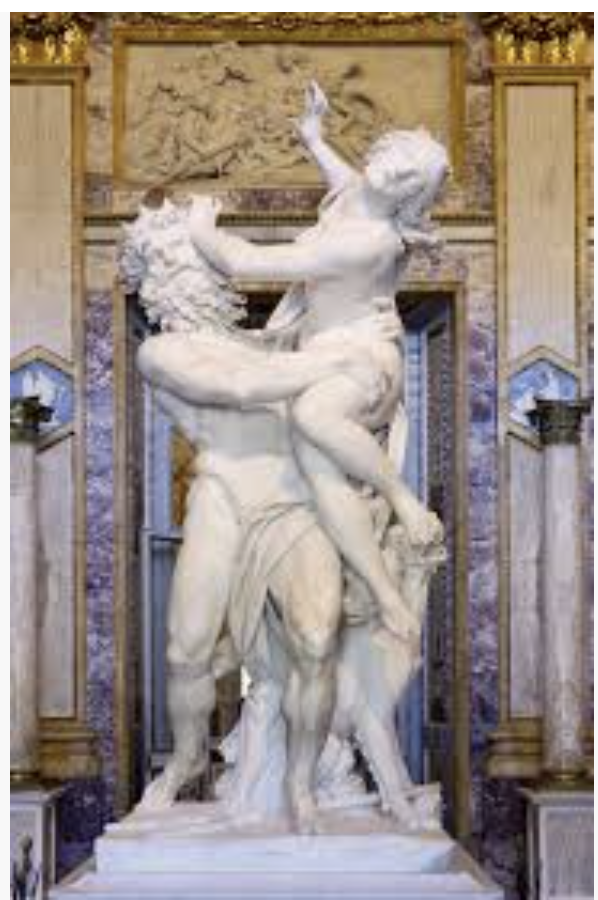
The Rape of Proserpina is the second of the four great mythological marble groups that Bernini produced for Cardinal Scipione Borghese between 1618 and 1625, and is widely regarded as the foundational monument of Baroque sculpture. Commissioned in 1621 and completed in 1622 — when Bernini was just twenty-three years old — it depicts the climax of the myth narrated by both Ovid in the Metamorphoses and Claudian in De raptu Proserpinae: the moment at which Pluto, god of the underworld, seizes and carries off Proserpina (Persephone), daughter of Ceres (Demeter), from the shores of Lake Pergusa in Sicily. Shortly after completion, Scipione Borghese presented the statue to Cardinal Ludovico Ludovisi, and it subsequently passed through several collections before being acquired by the Italian state and returned to the Villa Borghese in 1908. It remains there today.