An Artist Studying from Nature
Claude Lorrain, 1639
Overview
About This Work
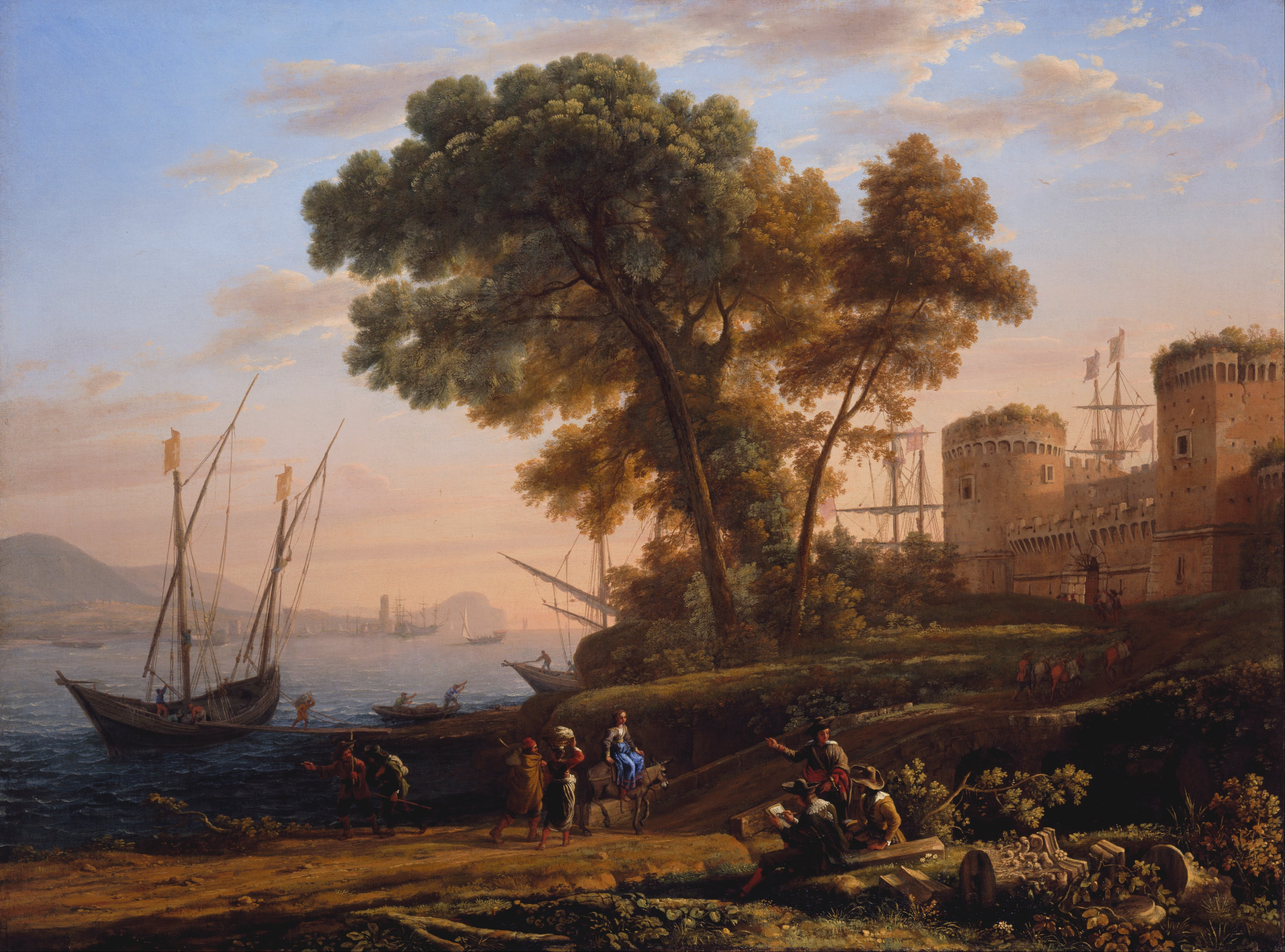
Painted in 1639, An Artist Studying from Nature is an oil on canvas by Claude Lorrain (c. 1604–1682), measuring approximately 51.3 x 41 cm (20 x 16 inches), now housed in the Cincinnati Art Museum. The painting presents a remarkably self-reflexive image: a landscape artist seated before an expansive natural vista, sketching or drawing directly from the observed world, while a companion figure (often interpreted as a fellow artist or patron) looks over the artist's shoulder, witnessing the moment of creative translation from nature to art. The work is extraordinary not merely for its depiction of a landscape but for its implicit meditation on the process of artistic creation itself: how does nature become art? How does direct observation transform into idealized representation? What is the relationship between empirical study and imaginative vision? The composition bathes the entire scene—the seated artist, his companion, the vast landscape beyond—in Claude's characteristic golden light, rendered with what his contemporary biographer Joachim von Sandrart described as meticulous study of "the red morning sky, sunrise and sunset and the evening hours." The painting exemplifies Claude's revolutionary position in seventeenth-century art: though landscape painting was considered a subordinate genre (beneath the prestige of history painting), Claude elevated landscape to a subject worthy of the highest artistic attention through the combination of meticulous observation of nature and classical principles of composition. The work functions simultaneously as landscape painting, as self-portrait (depicting the artist at work), as artistic manifesto (asserting the value of direct nature study), and as philosophical meditation on the creative process.