Ecstasy of St Teresa
Gianlorenzo Bernini, 1647-1652
Overview
About This Work
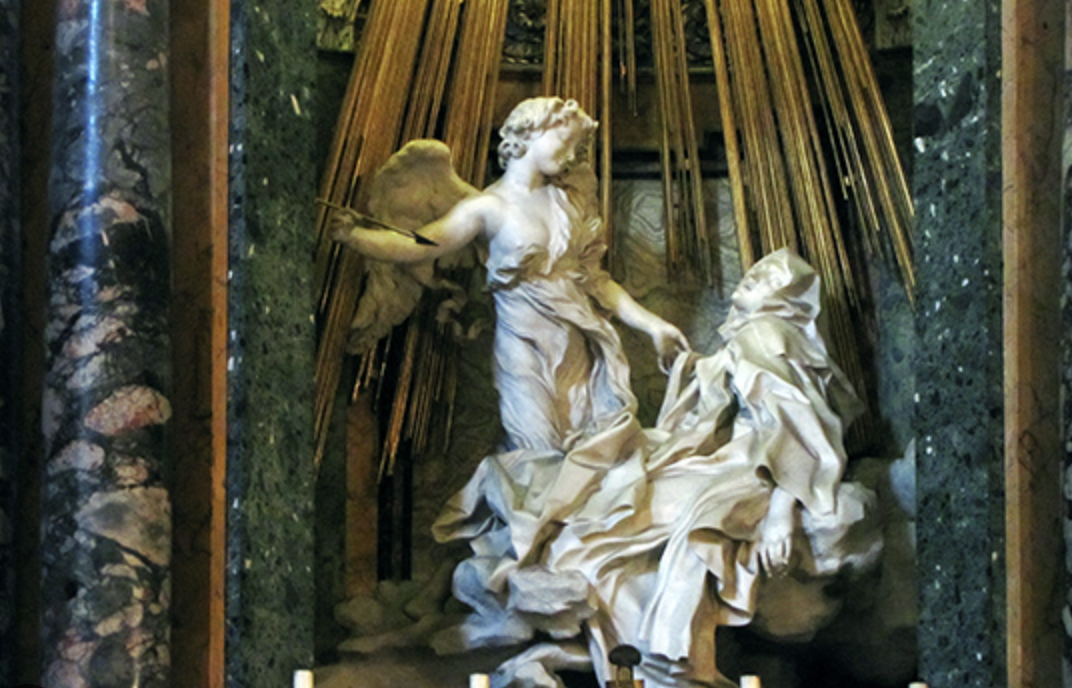
The Ecstasy of Saint Teresa (1647–1652) is Bernini's supreme masterpiece and the defining monument of High Roman Baroque religious art. Completed for Cardinal Federico Cornaro in the left transept of Santa Maria della Vittoria, the entire ensemble integrates architecture, sculpture, painting, and light into a unified bel composto (beautiful whole). The work depicts the transverberation—the mystical vision described by Teresa of Ávila in her autobiography El Libro de la Vida: an angel appearing to pierce her heart with a golden flaming spear, leaving her simultaneously in exquisite pain and overwhelming divine love. The commission coincided with Bernini's brief exclusion from papal patronage under Innocent X, paradoxically liberating him to create what many regard as his greatest achievement.