History of (tagg)Art...
HomeNatureIdentityRenaissanceBaroque

Nature

  • All Nature artworks
  • Landscape or Seascape in 2D
  • Animals in 2D or 3D
  • The Elements (Fire, Water, Wind or Earth) in 2D or 3D
  • +3 more topics

Identity

  • All Identity artworks
  • The Divine in 2D or 3D Works
  • Portraits in 2D Works
  • Portraits in 3D Works
  • +3 more topics

Renaissance

  • All Renaissance artworks
  • Religious Painting
  • Religious Sculpture
  • Mythological in 2D or 3D
  • +3 more topics

Baroque

  • All Baroque artworks
  • Religious Painting
  • Religious Sculpture
  • Mythological Painting
  • +6 more topics

About

A comprehensive study resource for Pearson Edexcel History of Art A-Level.

NatureIdentityRenaissanceBaroque

History of (tagg)Art... - A-Level Study Resource

Pearson Edexcel Specification

Admin
  1. Home
  2. Baroque
  3. S. Andrea al Quirinale

S. Andrea al Quirinale

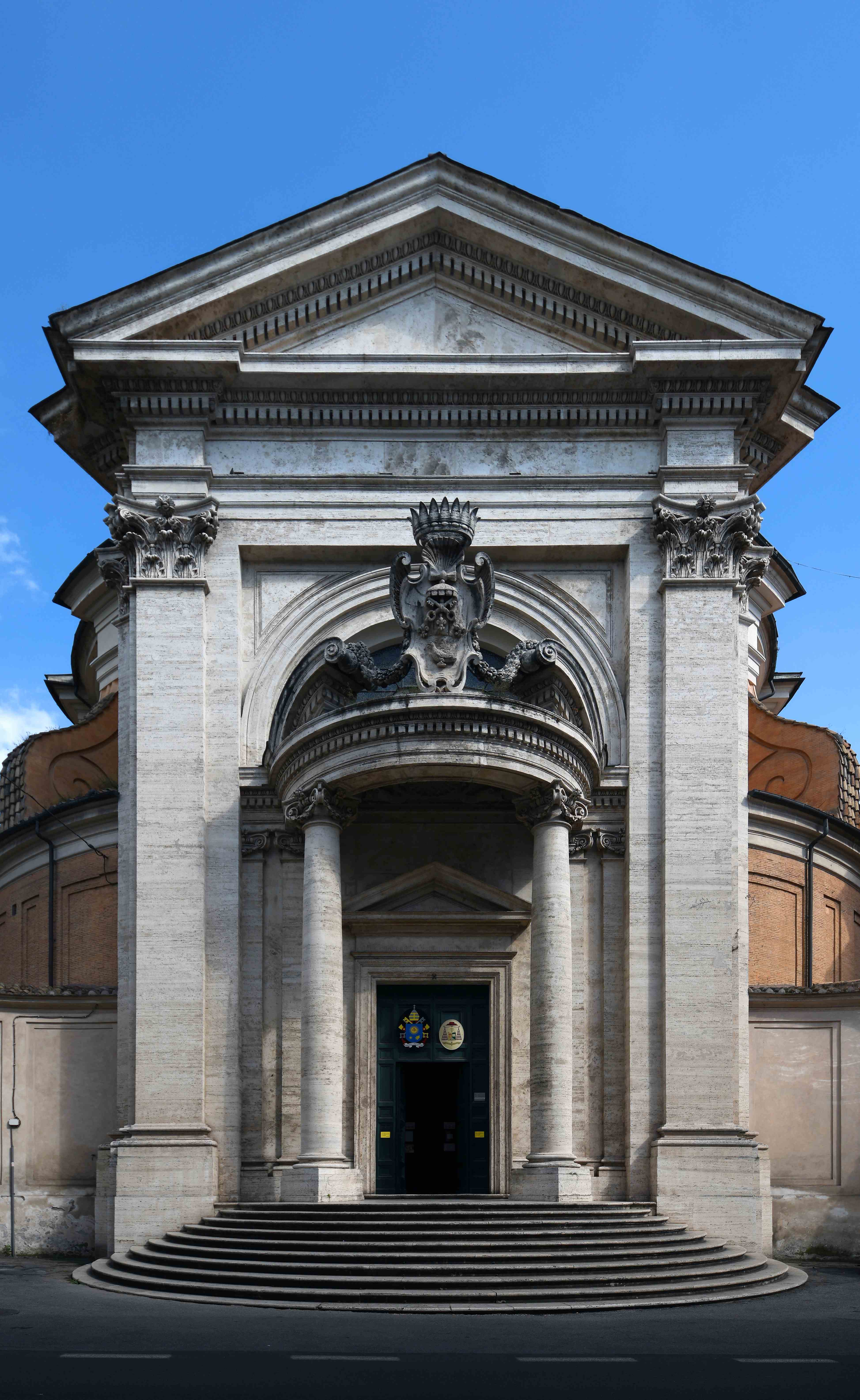
Gianlorenzo Bernini, 1661-1670
BaroqueReligious ArchitectureItalian Artists
S. Andrea al Quirinale by Gianlorenzo Bernini
Gian Lorenzo Bernini, Sant'Andrea al Quirinale (façade), 1658–1670. Travertine and brick. Rome, Italy.

Overview

About This Work

Designed and constructed between 1658 and 1670, Sant'Andrea al Quirinale is a small chapel commissioned by Cardinal Camillo Francesco Maria Pamphilj (nephew of Pope Innocent X) for the Jesuit novitiate on Rome's Quirinal Hill, designed and directed by Gian Lorenzo Bernini (1598–1680) in collaboration with Giovanni de Rossi and other architects and artists. The building represents a revolutionary achievement in Baroque ecclesiastical architecture: a small church of only 99 square meters, yet one that achieves extraordinary spatial drama and psychological intensity through the integration of architecture, sculpture, painting, and strategically controlled light. The plan is fundamentally oval (elliptical), with the entrance and high altar positioned on the short axis—an unusual disposition that creates a compressed, intimate spatial experience. The interior dazzles the visitor with the contrast between dark, warm-toned marble in the lower register and brilliant white and gold in the dome, with the eye drawn inexorably upward toward the lantern and the dove of the Holy Spirit. The dome's coffered vault—inspired by the Pantheon—is executed in white stucco with gilded ribs and populated with sculptured putti (cherubs) that seem to witness the apotheosis of Saint Andrew ascending into heaven above the high altar. The light sources are crucial: ordinary windows between the dome ribs provide diffuse illumination; yet the principal light flooding the high altar chapel derives from a hidden window above the altar, creating what Bernini's contemporaries described as "theatrical light"—light that appears supernatural, that seems to descend from the heavens themselves. Bernini, in his old age, regarded Sant'Andrea al Quirinale as his masterpiece, the work in which he was able to fully express his artistic vision. He famously refused payment for his personal design contributions, claiming it as a work of personal artistic fulfillment rather than commercial commission.

Visual Analysis

Composition

The Revolutionary Oval Geometry: Rather than employing the traditional circular or cruciform plans that had dominated ecclesiastical architecture since the Renaissance, Bernini chose an oval (elliptical) form—a choice that was itself revolutionary. As contemporary observers noted, an oval plan "could not have happened during the Renaissance." The oval creates what architect August Schmarsow termed "elastic expansion and contraction" of space: the walls curve dynamically, creating the impression of expansion as one moves toward the altar, then contraction as one moves toward the entrance. This continuous curvature—contrasted with the static geometry of rectangle or circle—creates what modern architectural theorists term "spatial kinetics": the space itself seems to move, to breathe, to possess organic life. The Short-Axis Orientation: Most unusually, Bernini positioned both the entrance and the high altar on the short axis of the oval rather than on the long axis. This disposition compresses the space horizontally, creating an intimate, even claustrophobic quality in the congregation area, while simultaneously forcing the eye to focus intensely on the altar and on the dome above it. The short-axis orientation creates maximum visual drama: entering the church, the visitor is immediately confronted with the full height of the interior, the dome seeming to vault overhead, the altar drawing the gaze inexorably forward. The Integration of Chapels: Rather than occupying separate spaces, the side chapels are integrated into the oval wall, articulated by columns and pilasters. The entablature that runs around the interior breaks forward slightly to define these chapel spaces, creating a subtle rhythm of advance and recession. The largest and most ornate chapel—dedicated to Saint Stanislaus Kostka, a Jesuit novice—projects into the oval space with its own columned frame, creating a three-dimensional articulation that prevents the wall from reading as a simple curved surface. The Dome and Its Supports: The oval space is covered by an elliptical dome—a technical achievement of considerable complexity. The dome is supported by an oval cylinder; large volutes (scroll-like elements) transfer the lateral thrust of the vault to the walls. The relationship between the oval plan and the elliptical dome creates a sense of structural inevitability: the dome appears to grow naturally from the walls rather than being imposed upon them.

Colour & Light

The Chromatic Contrast: The interior exploits a dramatic contrast between two distinct chromatic and spatial registers. In the lower portion, the walls are articulated with dark, warm-toned marbles—red, brown, violet—creating a zone of earthly, material reality, of weight and substance. Above, the dome and lantern are executed in white stucco and gilded details, creating what contemporary observers called "the celestial sphere"—a zone of heavenly light and spiritual transcendence. The contrast between dark below and light above creates a theological assertion: the congregation inhabits the earthly realm; the dome represents the heavenly realm toward which the soul aspires. The Strategic Light Sources: Light enters the dome through two distinct sources. Windows between the dome ribs provide consistent, diffuse illumination that bathes the dome in steady light. Yet the high altar receives its primary illumination from a hidden window above the altar niche—a technique Bernini had perfected in the Cornaro Chapel. This hidden light creates what contemporary observers termed "theatrical light"—light that appears to have no source, that seems to descend from the heavens, that creates an impression of supernatural rather than natural illumination. The contrast between the diffuse dome light and the directed altar light creates dramatic effect: the altar becomes visually dominant, the light itself becoming a vehicle for religious meaning. The Golden Details: Throughout the interior, gilded details catch and reflect light, creating additional luminosity and richness. The ribs of the dome are gilded; the details of the lantern contain gold; the sculptural details throughout are highlighted with gold. This gilding creates multiple points of light reflection, transforming what might otherwise be a simple white ceiling into a shimmering, complex surface that draws and holds the eye.

Materials & Technique

The Integration of Architecture, Sculpture, and Painting: Bernini's genius lay partly in his ability to synthesize multiple artistic media into what he termed the "bel composto" (beautiful composition) or "unity of the visual arts." At Sant'Andrea, architecture provides the spatial container; sculpture (the figure of St. Andrew ascending, the putti in the dome, the various architectural ornaments) provides figural drama; painting (the altarpiece depicting St. Andrew's martyrdom, various vault frescoes) provides narrative content. Yet all three media are perfectly integrated: the architecture frames the sculpture; the sculpture is silhouetted against the light; the painting anchors the narrative at the altar. The visitor experiences these not as separate artworks but as unified theatrical experience. The Marble Programme: The selection and arrangement of marbles represents deliberate symbolic and aesthetic choice. The dark marbles of the lower register—red from Portugal, violet from Belgium, brown from various sources—create visual density and psychological weight. The pure white of the dome represents purity and transcendence. The contrast is almost unsettling in its intensity: the dark masses of the side walls and the brilliant whiteness above seem almost to violate the Renaissance principle of harmonic balance. Yet the contrast is precisely what Bernini intended: it asserts the drama of the spiritual journey from earthly constraint to heavenly liberation. The Stucco Dome and Lantern: The dome is entirely executed in white stucco—a material that is simultaneously precious (requiring skilled craftsmen and considerable time to execute) and immaterial (stucco is essentially plaster, it is fragile, it appears ethereal). The choice of stucco for the dome—rather than stone or other more permanent materials—reinforces the theological meaning: the heavenly realm is not solid and material like the earthly realm but rather ethereal and temporary, a vision that might vanish.

Historical Context

Context

The Jesuit Commission and the Society of Jesus: Sant'Andrea was commissioned for the Jesuit seminary (the novitiate) on the Quirinal Hill, home to young men training for the Jesuit priesthood. The Society of Jesus, founded by Ignatius Loyola in 1540, had become by the seventeenth century one of the most influential orders in the Counter-Reformation Church. The Jesuits were educators and theologians, champions of emotional engagement with religious experience, and patrons of the arts as vehicles for spiritual education. Sant'Andrea thus functioned as a seminary chapel—a space for the daily liturgical life of the novices—but also as a model church, demonstrating Jesuit architectural and spiritual ideals. Cardinal Pamphilj as Patron: Cardinal Camillo Francesco Maria Pamphilj (1647–1666) commissioned the church; his family's coat of arms (the dove carrying an olive branch) appears throughout the church's decoration. The Pamphilj family was closely connected to Pope Innocent X (Giovanni Battista Pamphilj), and through this connection possessed significant power and resources. The commission represented both genuine piety (the Pamphilj had connections to the Jesuits) and strategic positioning: the patronage of a major ecclesiastical building enhanced the family's prestige and consolidated their position in Rome's ecclesiastical hierarchy. The Rivalry with Borromini: The design history of Sant'Andrea is complicated by architectural politics. Initially, Francesco Borromini (Bernini's great rival) was considered for the commission. However, a dispute between Borromini and Cardinal Pamphilj over Borromini's work at Sant'Agnese in Agone led to Borromini's replacement by Bernini. This rivalry between Bernini and Borromini defined High Baroque Roman architecture: Bernini championed sculptural plasticity, theatrical effects, and the integration of multiple artistic media; Borromini championed geometric complexity, spatial ambiguity, and architectural abstraction. Sant'Andrea represents the triumph of Bernini's aesthetic philosophy. The Papal Context and Alexander VII: While Cardinal Pamphilj commissioned the work, Pope Alexander VII Chigi (pontificate 1655–1667) formally approved the project. Alexander VII was a Bernini enthusiast and patron; under his pontificate, Bernini regained major authority in papal artistic projects. The church was substantially completed by 1661, but the façade was not begun until after Alexander VII's death (1667). The reason for the delay lay in Alexander VII's decree that the church façade must be hidden behind a large wall to avoid obstructing the view of the Quirinal Palace. After the pope's death, this requirement was abandoned, and Bernini designed the elegant façade that now faces the street. Bernini's Late Career Achievement: Bernini was seventy years old when he designed Sant'Andrea. By this point in his career, he had already created the Cornaro Chapel (1647–1651), the baldacchino at St. Peter's (1624–1633), and numerous other masterworks. Yet he regarded Sant'Andrea as his supreme achievement, the work in which he could express his full artistic vision without constraints. The intimacy of the space, the control over all architectural and artistic elements, the freedom to realize his theoretical principles—all contributed to his satisfaction. His refusal of payment for his personal design contributions represented an unusual statement: he valued the work as artistic achievement rather than as commercial commission.

Key Themes

Theatricality, Apotheosis, and the Synthesis of the Arts

The Theatrical Integration of the Arts: Sant'Andrea al Quirinale represents the fullest realization of Baroque aesthetics of theatricality—the conception of the church as a kind of stage on which divine drama is enacted. The architecture provides the stage; the lighting directs attention; the sculpture and painting depict the narrative (St. Andrew's martyrdom and ascension); the visitor/congregation becomes the audience. Bernini's background in theatrical set design (he designed elaborate festival structures and stage sets throughout his career) directly informed his architectural philosophy. The concept of the church as spiritual theater was central to Counter-Reformation theology: the visual and sensory excitement was intended to engage the emotions and direct the soul toward spiritual experience. The Apotheosis as Architectural Theme: The primary narrative action—St. Andrew's ascension into heaven—is rendered through the upward movement of the architecture itself. The eye enters the church horizontally, confronting the altar; then immediately (almost involuntarily) the eye lifts upward, following the walls as they curve toward the dome, drawn up into the white and golden dome space, arriving finally at the dove of the Holy Spirit in the lantern. This vertical journey mirrors the saint's ascension: through architecture, the viewer experiences the same upward trajectory that the saint experiences. The architecture thus becomes a vehicle for spiritual experience. The Contrast Between Matter and Spirit: The contrast between the dark, material marbles below and the ethereal, light-filled white and gold above enacts a theological opposition: the congregation inhabits the material realm; the dome represents the spiritual realm. The marbles are associated with weight, gravity, earthly substance; the stucco dome is associated with weightlessness, transcendence, heavenly light. Yet the two realms are not separated but rather integrated: the dark walls support the light dome; the earthly realm rises toward the heavenly realm. This architectural integration of opposites represents the Baroque philosophical embrace of paradox and paradoxical synthesis. The Control of the Viewer's Experience: Bernini's design demonstrates extraordinary control over the viewer's perceptual experience. The oval shape ensures that the visitor, regardless of where they stand, experiences the altar as the focal point. The light sources are positioned to direct attention. The sculptural elements are positioned to create dramatic silhouettes against the light. Nothing is left to chance; the entire spatial and sensory experience is carefully orchestrated. This total control of the viewer's perceptual experience represents the apotheosis of Baroque aesthetics: the work of art is not a passive object contemplated by an independent viewer but rather an active agent that shapes the viewer's perception and emotional response.

Exam Focus Points

Critical Perspectives

Wittkower's Assessment and the "Engine of Space": Rudolf Wittkower, the foundational twentieth-century historian of Baroque architecture, observed that Sant'Andrea represented the realization of Bernini's conception of space as an "engine"—a dynamic force through which one moves, and which itself moves. The oval space is not static but rather dynamic; the walls do not stand still but rather seem to undulate. The dome does not sit passively above but rather seems to descend. This conception of space as kinetic and energized fundamentally distinguished Baroque architecture from Renaissance precedents. The Comparison with Borromini: Borromini's contemporary churches (such as San Carlo alle Quattro Fontane or San Ivo alla Sapienza) employ similar strategies of spatial complexity and curvature, yet Borromini's approach emphasizes geometric abstraction and intellectual complexity, while Bernini emphasizes sensory engagement and emotional impact. The comparison reveals two competing Baroque architectural philosophies: Borromini's abstract intellectualism versus Bernini's sensory theatricality. The Theological Function of Light: The strategic deployment of light in Sant'Andrea serves profound theological purposes. The hidden light source above the altar transforms the altar into a zone of divine presence; the diffuse light in the dome creates the impression of heavenly illumination. Light itself becomes a vehicle for theological meaning—a specifically Counter-Reformation strategy of employing sensory experience (in this case, light) to direct the soul toward spiritual apprehension. The Influence on Subsequent Architecture: Sant'Andrea's influence on eighteenth-century Baroque and Rococo architecture was profound. The oval plan became increasingly common; the integration of light as a primary compositional element became standard; the notion of the church as synthesized total artwork became canonical. Architects throughout Europe adopted and adapted Bernini's strategies. The Small Scale and Intimate Experience: Unlike the monumental scale of St. Peter's Basilica or the vast interior vaults of Renaissance cathedrals, Sant'Andrea is deliberately small (only 99 square meters). This small scale creates what contemporary observers called "unexpected intimacy." The proximity of the visitor to the architecture, the sculpture, the paintings—creates an immediacy and psychological intensity that larger spaces cannot achieve. The small scale is thus itself a sophisticated artistic choice, not a limitation.

On this page

OverviewVisual AnalysisHistorical ContextKey ThemesExam Focus Points