History o' Phoeart
  • Home

Nature

  • Overview
  • Landscape or Seascape in 2D
  • Animals in 2D or 3D
  • The Elements (Fire, Water, Wind or Earth) in 2D or 3D
  • The Relationship between Man/Woman and Nature in 2D or 3D

Identity

  • Overview
  • The Divine in 2D or 3D Works
  • Portraits in 2D Works
  • Portraits in 3D Works
  • Gender Identity in 2D or 3D Works

Renaissance

  • Overview
  • Religious Painting
  • Religious Sculpture
  • Mythological in 2D or 3D
  • Portraits in 2D or 3D

Baroque

  • Overview
  • Religious Painting
  • Religious Sculpture
  • Mythological Painting
  • Mythological Sculpture

About

A comprehensive study resource for Pearson Edexcel History of Art A-Level.

NatureIdentityRenaissanceBaroque

History o' Phoeart - A-Level Study Resource

Pearson Edexcel Specification • Use ⌘K to search

  1. Home
  2. Paper 1
  3. Nature
  4. Animals in 2D or 3D
  5. Puppy
Paper 1Nature
Nature
Landscape or Seascape in 2D
Animals in 2D or 3D
Pre-1850
Post-1850
Balloon Dog

Balloon Dog

Jeff Koons

Puppy

Puppy

Jeff Koons

Non-Western
The Elements (Fire, Water, Wind or Earth) in 2D or 3D
The Relationship between Man/Woman and Nature in 2D or 3D
Plants in 2D or 3D
Architecture

6 scopes • 24 artworks

Puppy

Jeff Koons, 1992-7
NaturePost-1850
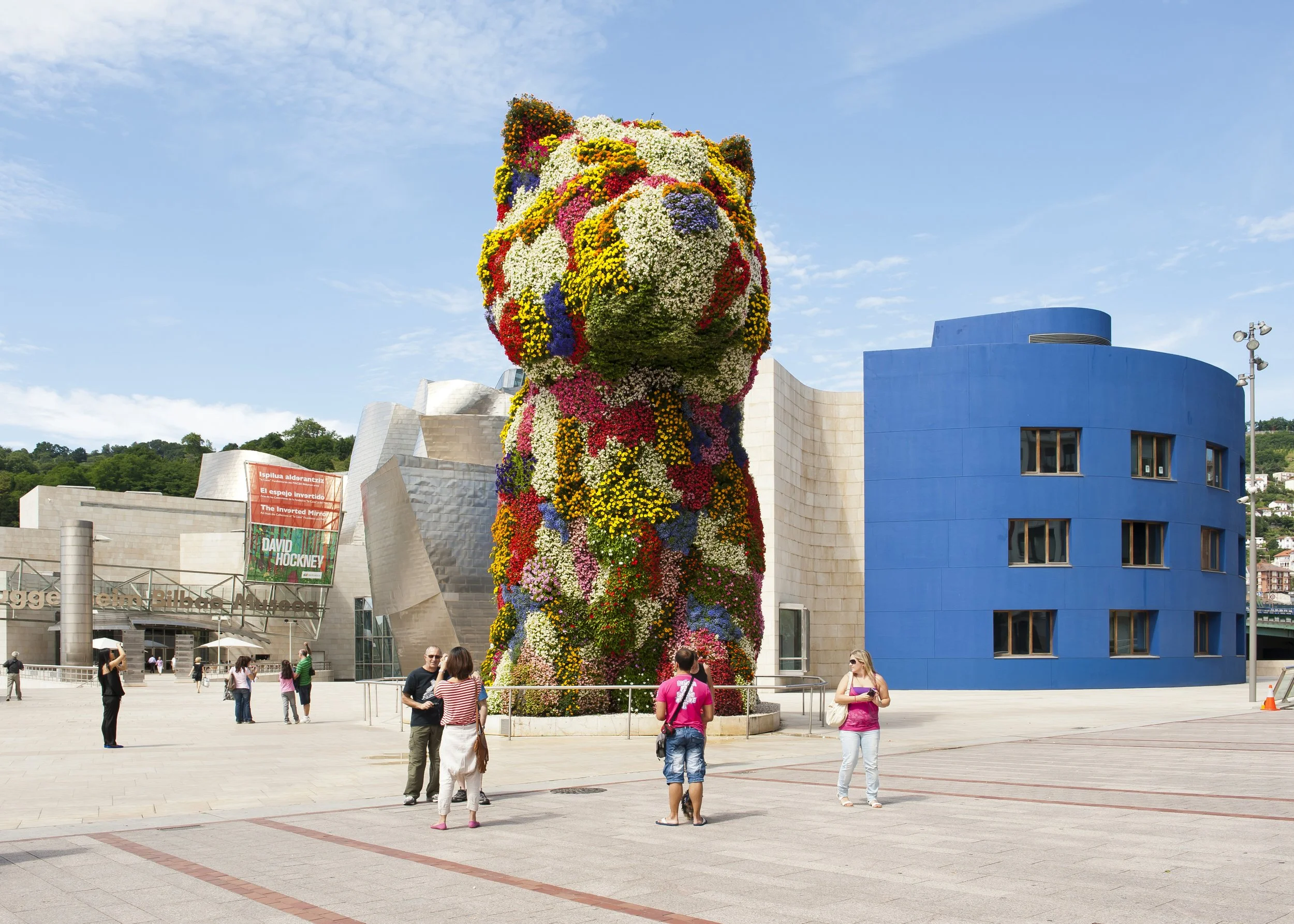
Puppy by Jeff Koons
Jeff Koons, Puppy, 1992–1997. Stainless steel, soil, geotextile fabric, internal irrigation system, and live flowering plants, 1240 × 830 × 910 cm. Guggenheim Museum Bilbao, Spain.

Overview

About This Work

Puppy (1992) is a monumental living topiary sculpture by American contemporary artist Jeff Koons, standing 12.4 metres (approximately 41 feet) tall. Created as a commission for Documenta 9 (an international contemporary art exhibition held in Kassel, Germany) and first erected in 1992 at Arolsen Castle in Bad Arolsen, Germany, Puppy depicts a West Highland White Terrier rendered in stainless steel with an internal structure supporting approximately 17,000–38,000 live flowering plants, including marigolds, begonias, impatiens, petunias, and lobelias. The work has been permanently installed outside the Guggenheim Museum Bilbao in Spain since 1997, where it has become one of the most recognizable and beloved contemporary artworks in the world. Unlike Balloon Dog, which is permanent and unchanging, Puppy is fundamentally dynamic: its appearance transforms with the seasons, with plant replacements occurring twice yearly (May and October), requiring a team of twenty specialists and nine days to complete. The work represents a critical moment in Koons' artistic practice, following the controversial Made in Heaven series (which featured explicit erotic imagery), and marks his deliberate shift toward creating art designed to communicate warmth and love to the widest possible audience. Puppy synthesizes contemporary digital design technology, 18th-century formal garden traditions, Baroque cathedral aesthetics, and commercial horticultural techniques into a work that challenges fundamental distinctions between nature and culture, permanence and ephemerality, and high art and popular sentiment.

Visual Analysis

Composition

Monumentality and the Familiar: The work depicts a recognizable dog pose—sitting upright with front paws resting casually. This conventional sit posture is rendered at monumental scale, creating a cognitive dissonance between the familiar form and its overwhelming physical presence. The scale simultaneously makes the puppy both protective (it towers over viewers, offering shelter) and vulnerable (the larger it is, the more fragile and dependent on continuous care). Symmetry and Baroque Balance: The composition exhibits bilateral symmetry (the two ears, two front paws, etc.), referencing classical sculptural principles and Baroque architectural grandeur. However, the plant coverage introduces asymmetries—blooming patterns, seasonal colour variations, and weather damage create visual imbalance within this symmetrical framework. Koons himself notes that Puppy achieves a balance between the symmetrical and the asymmetrical. The Void Within: The sculpture contains a hollow interior—a structure robust enough to house people. As Koons states: Puppy is a shelter. It's built out of stainless steel. It's like the fuselage of an airplane. You could live inside it. This internal void lends the work architectural significance; it is simultaneously a sculpture, a building, and a shelter.

Colour & Light

Chromatic Variation and Seasonality: Unlike static sculpture, Puppy's colour palette shifts dramatically with seasonal plant changes. Spring/summer installations feature warm reds, pinks, oranges, and yellows (begonias, impatiens, petunias); autumn/winter installations shift to cooler purples and whites (pansies, winter violas). This means the work is literally never the same twice—a striking philosophical statement about impermanence and renewal. Living Surface: The plant-covered surface is not inert but alive and growing. Flowers open and close diurnally; plants respond to weather and climate. The work therefore exhibits a form of sentience or autonomy—it is not entirely controlled by the artist but partially autonomous, responding to natural processes beyond human intention. Luminosity and Vitality: The vibrant colours of the flowers create a joyful, exuberant visual effect. The reflective stainless steel substructure shows beneath areas of sparse coverage, subtly visible through the living plant layer, creating an interplay of organic and industrial materials.

Materials & Technique

Stainless Steel Substructure: The internal framework comprises colour-coated chrome stainless steel, chosen for its durability and ability to withstand weather and repeated plant replacements. The steel fuselage is engineered like aircraft construction, with a self-supporting structure capable of supporting approximately 15 tonnes of soil and water. Living System: The sculpture incorporates an automated irrigation system comprising multiple levels of water pipes and feeding mechanisms that nourish the plants daily. Soil, geotextile fabric, and wire mesh form layers supporting plant growth. This living system requires constant technological maintenance—water, nutrients, and pest management. Computer Modelling and Digital Design: The Puppy form was conceived using sophisticated digital 3D modelling software, demonstrating Koons' integration of contemporary technology into artistic practice. The digital design was then translated to the monumental physical structure through precision engineering. Horticultural Expertise: The replacement of 38,000 flowers requires specialized horticultural knowledge. The selection of specific plant varieties (colour, growth rate, durability in outdoor conditions) reflects collaboration between Koons and landscape designers and horticulturists. The work is thus a hybrid creation, merging artistic intention with botanical expertise.

Historical Context

Context

Post-Made in Heaven Transition: Puppy (1992) followed immediately after Koons' controversial Made in Heaven series (1990–1991), which featured explicit photographs and videos of Koons with pornographic actress Ilona Staller (La Cicciolina). That series provoked outrage for its graphic sexuality and perceived obscenity. Puppy represents a deliberate strategic shift: Koons consciously moved from creating divisive, provocative work to creating work explicitly designed to communicate warmth and love and instill confidence and security. Neo-Pop and Populism: Puppy exemplifies Neo-Pop aesthetics—the return to Pop Art's strategies of appropriating mass culture imagery but with greater self-consciousness about irony and sincerity. Unlike Warhol's deadpan distance, Koons openly declares the work's intention to please and uplift. This sincerity within an ironic framework creates productive ambiguity. Public Art and Museum Integration: The placement of Puppy outside the Guggenheim Bilbao (one of the world's most prestigious contemporary art museums) was a deliberate choice to reach maximum public visibility. The sculpture functions simultaneously as fine art and as public spectacle. Its location at a major museum lends artistic authority while its popular appeal transcends elite art-world boundaries. The Sensation Exhibition: Puppy gained particular prominence when featured in the Sensation: Young British Artists from the Saatchi Collection exhibition at the Royal Academy of Art, London (1997), and subsequently the Brooklyn Museum (1999). The exhibition sparked massive public debate about contemporary art's legitimacy, with Puppy becoming a focal point for discussions about taste, sincerity, and art's relationship to popular culture.

Key Themes

Connection to Nature and Identities (Childhood, Care, Domesticity)

Living Art and Natural Process: Unlike most sculpture, which aspires to permanence and transcendence of nature, Puppy is fundamentally dependent on nature. The living plants constitute the work; their growth, health, and seasonal cycles are integral to its meaning. This challenges the Romantic notion that art transcends nature; instead, Puppy suggests that art can be indistinguishable from nature—nature itself becomes the artistic medium. Mortality and Renewal: The twice-yearly replacement of dying plants introduces themes of mortality and renewal. Nothing lasts permanently; even monumental art requires constant maintenance and replacement. This resonates with Buddhist and other philosophical traditions emphasizing impermanence. Yet renewal is also joyful—the fresh blooming of new flowers each season suggests perpetual hope and regeneration. The Domestication of Nature: The 18th-century formal garden tradition that inspired Puppy represents the historical project of controlling and shaping nature according to human aesthetic desire. Topiary is nature forced into unnatural forms to please human sensibilities. Koons' work references this historical relationship, suggesting that all human engagement with nature involves a degree of domination and artificiality. Emotional Attachment and the Beloved Pet: The puppy itself carries profound emotional resonance. Puppies symbolize innocence, unconditional love, loyalty, and vulnerability. By monumentalizing the puppy, Koons elevates the emotional attachments we form with beloved pets, suggesting these feelings merit artistic commemoration. This is both sincere celebration and ironic critique of sentimentality in contemporary culture.

Exam Focus Points

Critical Perspectives

Accessibility vs. Condescension: Defenders of Puppy argue that Koons genuinely democratized art by creating work that appeals across educational and class boundaries. The puppy and flowers are universally recognizable; no specialized knowledge is required to appreciate the work's emotional appeal. Yet critics argue this accessibility verges on condescension—that addressing the masses requires dumbing down artistic content and perpetuating saccharine sentimentality that high art traditionally rejected. Sincerity and Irony: A central debate concerns whether Koons is sincere or ironic. Does he genuinely believe in the redemptive power of joy, flowers, and puppies? Or is he mocking the public's susceptibility to sentimentality? Koons himself insists on sincerity, yet the work's camp grandiosity and artificiality create ironic distance. This productive ambiguity is central to the work's meaning. Technology and Nature: Puppy exemplifies how contemporary art merges technological sophistication with natural processes. The automated irrigation system, stainless steel engineering, and digital design coexist with living plants and natural growth patterns. This challenges the nature/culture binary, suggesting they are inseparable in contemporary experience. Maintenance and Artistic Authority: The work requires constant care—watering, fertilizing, plant replacement. This raises questions about artistic authority and authorship. After Koons' initial design, the work is maintained by teams of gardeners and horticulturists. Is Puppy Koons' artwork, or a collaborative creation? Does artistic intention persist when execution is delegated? Historical Allusion and Pastiche: The work references multiple historical traditions—18th-century formal gardens, Baroque cathedrals, Romantic landscape aesthetics—without endorsing any single tradition. This creates what Fredric Jameson called postmodern pastiche: the free-floating citation of historical styles without coherence or clear meaning.

On this page

OverviewVisual AnalysisHistorical ContextKey ThemesExam Focus Points