History of (tagg)Art...
HomeNatureIdentityRenaissanceBaroque

Nature

  • All Nature artworks
  • Landscape or Seascape in 2D
  • Animals in 2D or 3D
  • The Elements (Fire, Water, Wind or Earth) in 2D or 3D
  • +3 more topics

Identity

  • All Identity artworks
  • The Divine in 2D or 3D Works
  • Portraits in 2D Works
  • Portraits in 3D Works
  • +3 more topics

Renaissance

  • All Renaissance artworks
  • Religious Painting
  • Religious Sculpture
  • Mythological in 2D or 3D
  • +3 more topics

Baroque

  • All Baroque artworks
  • Religious Painting
  • Religious Sculpture
  • Mythological Painting
  • +6 more topics

About

A comprehensive study resource for Pearson Edexcel History of Art A-Level.

NatureIdentityRenaissanceBaroque

History of (tagg)Art... - A-Level Study Resource

Pearson Edexcel Specification

Admin
  1. Home
  2. Renaissance
  3. Adam

Adam

Tullio Lombardo, c.1490-95
RenaissanceReligious SculptureVenice
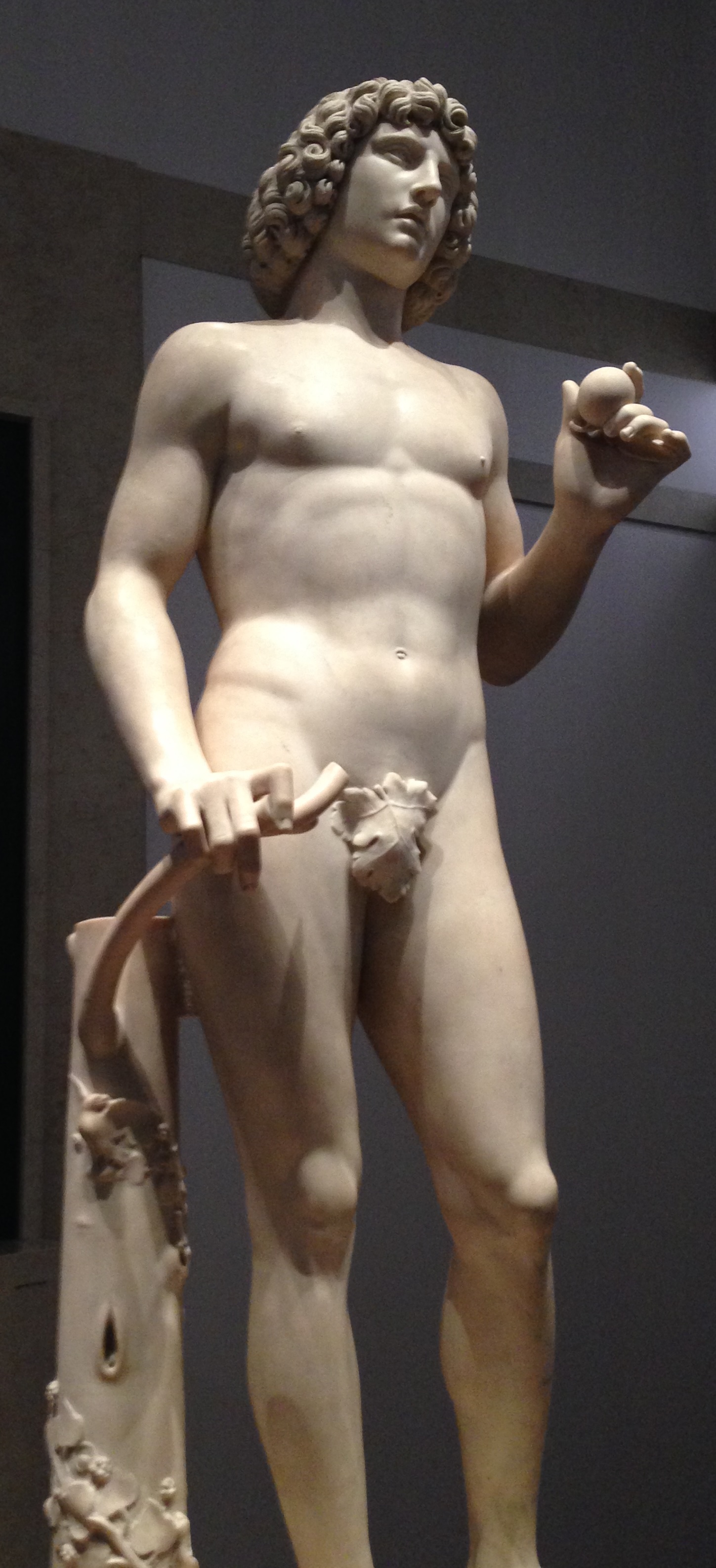
Adam by Tullio Lombardo
Adam by Tullio Lombardo, c. 1490-1495. Marble, life-size. The Metropolitan Museum of Art, New York.

Overview

About This Work

Adam is a life-size marble sculpture by the Venetian Renaissance master Tullio Lombardo (c. 1455–1532), carved between 1490 and 1495 for the funerary monument of Doge Andrea Vendramin in Venice. Now housed in The Metropolitan Museum of Art in New York (since 1936), it stands as one of the most historically significant and artistically profound sculptures of the Italian Renaissance. The work is revolutionary for a single fact: it is the first monumental classical male nude carved in marble since classical antiquity—making it a watershed moment in Renaissance art history. Tullio carved Adam not from tradition or religious narrative alone, but from deep study of classical Greco-Roman sculpture. The figure's head is modeled on the Antinous type (the favorite of Roman Emperor Hadrian); the body derives from the Doryphoros of Polykleitos and the Apollo Belvedere. Yet this is not mere archaeological imitation. Tullio synthesizes multiple classical sources with a uniquely Venetian sensibility, creating a figure that is simultaneously classical in ideal beauty and profoundly humanistic in its psychological depth. Adam stands serenely, contemplative and thoughtful, at the moment before the Fall—not yet corrupted by sin, yet anxious in anticipation of temptation. The sculpture is the only surviving piece from the Vendramin monument bearing Tullio's signature, a testament to his pride in the achievement. It remains one of the most moving meditations on divine creation, human beauty, human frailty, temptation, and redemption in all of Western art.

Visual Analysis

Composition

Adam stands in the characteristic contrapposto pose inherited directly from classical Greek sculpture, specifically from the Doryphoros (spear-bearer) of Polykleitos (c. 440 BC). The figure's weight rests entirely on the right leg, which is straight and vertical. The left leg is bent and relaxed, with the foot resting only on the ball of the foot, suggesting lightness and ease. This weight shift creates a gentle S-curve through the torso: the hips shift slightly to the right, while the shoulders counter-shift to the left. This contrapposto pose was understood in the Renaissance as the apex of classical sculptural achievement. The stance creates a sense of potential movement in what is technically a static figure—the body appears to be pausing mid-stride, capable of motion at any moment. Yet the equilibrium is perfect; the figure appears relaxed and naturalistic rather than strained or artificial. The most striking feature is the face. Scholars unanimously agree that Adam's head is modeled on the Antinous type, the much-depicted idealized portrait of Antinous, the favored lover of Roman Emperor Hadrian. The face displays characteristic features: strigilated eyebrows, a perfectly proportioned nose, and fleshy, sensuous lips. The expression is serene and contemplative—almost melancholic in its pensiveness. The eyes gaze downward, not in shame but in quiet thought.

Colour & Light

The sculpture exploits the luminous qualities of pure Carrara marble to create subtle plays of light across the idealized form. The highly polished surface captures and reflects ambient light, creating soft gradations that emphasize the anatomical modeling. Light falls differently across the tensed weight-bearing leg versus the relaxed bent leg, accentuating the contrapposto rhythm. The marble's translucency creates a sense of living flesh, particularly visible in the thinner areas around the face and hands. This "skin-like" quality was prized in Renaissance sculpture as evidence of technical mastery and classical understanding. The surface treatment varies subtly—more polished on the front-facing surfaces, slightly less finished on the back areas that were originally positioned against an architectural niche. The symbolic elements—the fig leaf, apple, serpent, and grapevine—are rendered with careful attention to textural contrast. The smooth human flesh stands against the more roughly textured tree trunk and coiling serpent, creating visual and tactile variety within the unified composition.

Materials & Technique

From the neck downward, the body displays extraordinary anatomical mastery. Every muscle group is rendered with precise observation: the pectoralis major is clearly articulated, the rectus abdominis is defined with careful attention to the vertical linea alba (a line running down the center of the abdomen), and the serratus anterior is visible along the ribs. The legs show detailed musculature of the quadriceps and other thigh muscles. Yet this anatomical accuracy is not mere documentation; it is part of a unified idealization. The musculature is enhanced and harmonized to create an image of perfect male form. The proportions are calculated with precision. The figure measures approximately 7⅓ heads tall, a classical proportional formula. There is exactly one head-height from the chin to the nipples, and another head-height from the nipples to the navel. Remarkably, the back of the figure is less carefully finished than the front. This is not a fault but a pragmatic choice: the sculpture was originally placed in an architectural niche as part of the Vendramin monument, where it would be viewed primarily from the front and sides.

Historical Context

Context

Adam was originally carved for one of the most elaborate funerary monuments of the Venetian Renaissance: the monument of Doge Andrea Vendramin (who died in 1478). The monument was not built immediately; Tullio carved Adam in the early 1490s, about a decade after the Doge's death. This was no modest memorial. The Vendramin monument originally contained 18 figures, more than decorated any other Venetian funerary monument of the period. The entire monument was designed in the style of a Roman triumphal arch, asserting that Venetian nobility was the heir to Roman imperial power. Tullio came from a prestigious dynasty of sculptors and architects based in Venice. His father Pietro Lombardo was a major figure in Venetian Renaissance sculpture. Tullio became known as the artist who "absorbs himself in Classical style and imagery" more completely than any other Venetian artist of his generation. It is important to understand that Tullio's classicism was distinctly Venetian, not Florentine. Florentine artists like Donatello and Michelangelo used classical forms as vehicles for human drama. Venetian artists pursued a more archaeologically precise classicism, seeking to recreate the accuracy and detail of classical prototypes with greater fidelity. In 1819, Adam and his companion Eve were removed from the Vendramin monument on grounds of religious decorum. The nude figures were deemed "indecent" and were transferred to the Palazzo Vendramin to shield the public from their nakedness.

Key Themes

The First Classical Monumental Nude and the Moment Before the Fall

For over a thousand years—from the fall of Rome through the medieval period—large-scale male nudes in sculpture were virtually unknown in European Christian art. The human nude was associated with pagan antiquity; Christian theology emphasized the body as corrupted matter. Tullio's Adam, as the first monumental marble nude since antiquity, was revolutionary. It asserted the Renaissance humanist conviction that the human form, in its idealized perfection, expresses divine creation. The most theologically sophisticated choice is Tullio's decision to represent Adam before he eats the apple. This is not the moment of crisis or the moment of fallen shame, but the moment of innocence that precedes catastrophic choice. Adam is aware of temptation (he holds the apple, he gazes at the serpent), yet he has not yet made the irreversible decision that will bring sin, shame, and death into the world. Several symbolic elements accompany the figure: The fig leaf covers Adam's genitals—both anachronistic (he wouldn't need it yet) and prophetic (anticipating the shame to come). The apple of temptation is held gently, suggesting the struggle is internal. The serpent, coiled around the tree trunk, is rendered with seductive beauty. The grapevine represents Redemption through Christ's sacrifice. The Fall and Redemption are thus visually balanced within a single composition. Perhaps the deepest theme is the paradoxical coexistence of beauty and frailty, strength and vulnerability. Adam's idealized form might suggest invulnerability, yet his contemplative expression suggests profound vulnerability. This captures something essential about human existence: our greatest beauty is inextricably linked to our greatest frailty.

Exam Focus Points

Critical Perspectives

First Classical Monumental Nude: Explain the historical significance—no large-scale male nudes had been carved in over 1,000 years. What does this represent about Renaissance attitudes toward the human body and classical culture? Contrapposto and Classical Sources: Identify the contrapposto stance and trace its ancestry to Polykleitos's Doryphoros. Analyze how Tullio combined multiple classical sources (Antinous, Apollo Belvedere, Late Antique ivory). Why is the synthesis of sources important, rather than slavish imitation? The Antinous Type and Psychological Depth: Describe the features of the Antinous model (strigilated eyebrows, fleshy lips, serene expression). How does Tullio use a classical portrait type to convey complex emotions and psychological states? The Narrative Choice—Before the Fall: Why is it significant that Tullio shows Adam before eating the apple? What does this narrative choice communicate about innocence, anticipation, and choice? Symbolic Elements: The fig leaf—why include it, and what does it symbolize? The apple, serpent, and grapevine—explain their theological significance. How do these elements create a balance between Fall and Redemption? Venetian vs. Florentine Classicism: Distinguish Venetian archaeological precision from Florentine expressiveness. How does Venice's self-proclaimed succession to Rome and Byzantium inform its artistic approach? Proportional System and Mathematical Harmony: The figure is 7⅓ heads tall—explain classical proportional systems. How do proportions contribute to the sense of idealized beauty?

On this page

OverviewVisual AnalysisHistorical ContextKey ThemesExam Focus Points