Agony in the Garden
Giovanni Bellini, c.1459
Overview
About This Work
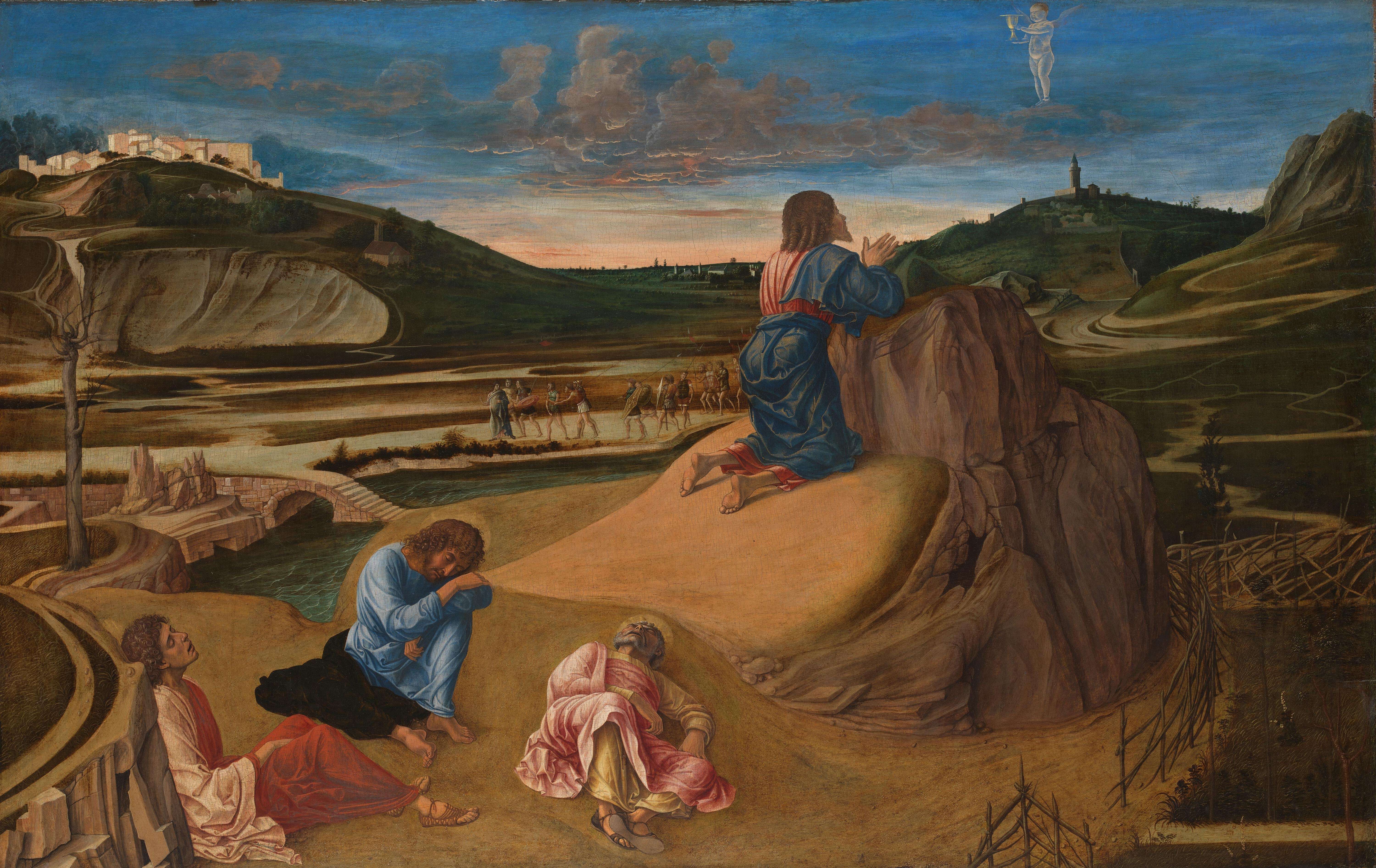
Agony in the Garden (also called Agony in Gethsemane) is a tempera on wood panel by the Venetian Renaissance master Giovanni Bellini (c. 1433/1435–1516), painted between 1459 and 1465. Currently housed in the National Gallery, London, it depicts the biblical moment when Christ, knowing his arrest and crucifixion are imminent, withdraws to the Garden of Gethsemane to pray in anguish. The painting is revolutionary not for its subject matter—countless artists had painted this scene before—but for its treatment of atmosphere, light, and landscape. Bellini bathes the scene in the soft, warm glow of dawn rather than the traditional darkness of night. The three sleeping apostles (Peter, James, and John) are rendered with unprecedented realism. And most radically, the landscape is not a mere background but an active participant in the narrative, its vast open spaces conveying both the loneliness of Christ's ordeal and the inevitability of approaching soldiers. The painting represents a decisive moment in Renaissance art history: the emergence of Venetian painting as a distinct tradition emphasizing color, light, and atmosphere over the hard-edged architectural precision of Florence and Mantua. For this reason, it is best understood in direct conversation with an earlier version of the same subject by Bellini's brother-in-law, Andrea Mantegna. The two works hang side by side in the National Gallery, creating an unintended but powerful dialogue that reveals how profoundly Bellini's vision differs from that of the Paduan school.