Bacchus
Michelangelo, 1496-97
Overview
About This Work
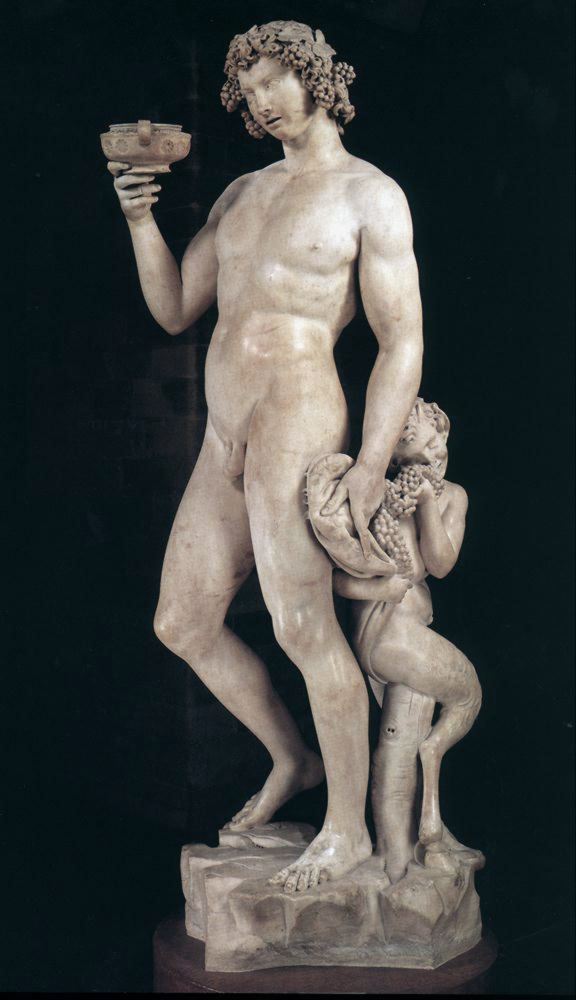
Bacchus is a marble sculpture by Michelangelo Buonarroti (1475–1564), carved between 1496 and 1497 when the artist was only 21–22 years old. Standing 203 centimetres (6 feet 8 inches) tall with its base, it now resides in the Bargello Museum in Florence. The sculpture depicts Bacchus, the Roman god of wine, in a state of pronounced intoxication, his body swaying precariously as if about to topple, his face lifted back in ecstatic reverie, his eyes half-closed and mouth agape. He holds a goblet of wine in his right hand and a cluster of grapes in his left; a small, mischievous satyr crouches beside him, reaching for the fruit. The Bacchus is one of the most controversial, psychologically complex, and technically audacious sculptures of the Renaissance. It was commissioned by Cardinal Raffaele Riario, a powerful churchman and collector of classical sculpture, but he rejected it as "too sinful"—finding its naked sensuality, sexual ambiguity, and explicit depiction of drunkenness unsuitable for ecclesiastical patronage. The work was subsequently purchased by Jacopo Galli, a banker and friend of Michelangelo, who installed it in his garden among classical antiquities.