Basilica of Sant'Andrea, Mantua
Alberti, 1472-94
Overview
About This Work
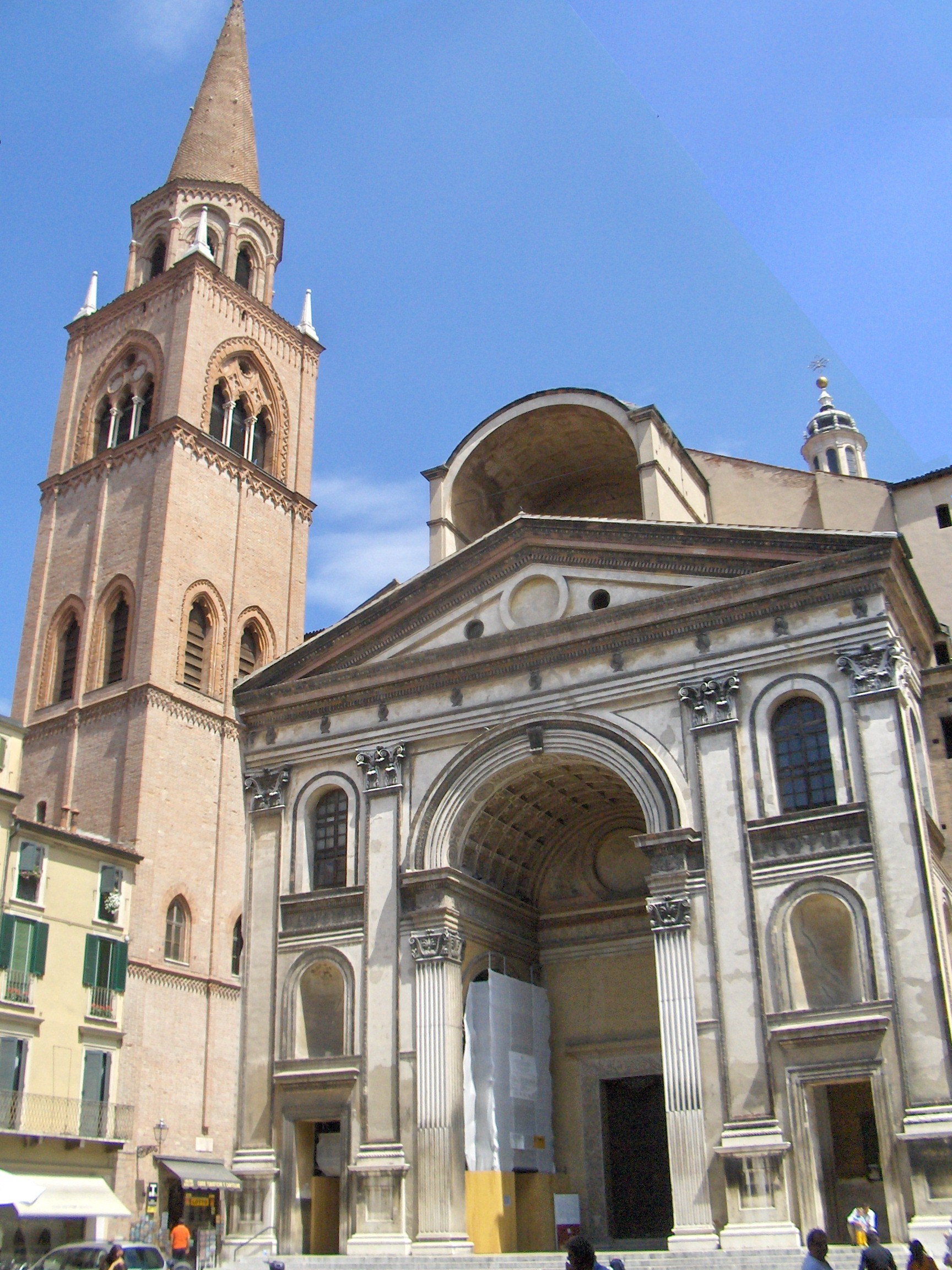
Basilica of Sant'Andrea in Mantua is the last and most complete architectural work designed by Renaissance master Leon Battista Alberti (1404–1472), begun in 1472 and substantially completed by 1494 (with final details added in the eighteenth century). Commissioned by Ludovico III Gonzaga, the wealthy and powerful Marquis of Mantua, the church was built to house and commemorate an extraordinary sacred relic: the blood of Christ. The building stands as one of the supreme achievements of Renaissance architecture and a turning point in the history of Christian church design. Sant'Andrea represents a revolutionary synthesis of three distinct classical architectural forms: the temple front (with its Corinthian pilasters and pediment), the Roman triumphal arch (as the dominant facade motif), and the Roman basilica (as the interior structural type). Yet each of these classical elements is transformed in service of Christian faith: the triumphal arch becomes a sacred processional gateway; the basilica interior becomes a unified space for displaying the sacred relic; the classical orders become the framework for spiritual hierarchy and divine proportion. Most significantly, Sant'Andrea established a revolutionary new church plan that would dominate Renaissance and Baroque architecture for centuries: the single-nave church with flanking side chapels, eliminating the traditional side aisles and columns that had dominated medieval basilicas. This innovation solved a practical problem—providing pilgrims with unobstructed views of sacred relics and altars—while achieving extraordinary spatial unity and architectural clarity. The vast barrel-vaulted interior (18 metres wide—the largest barrel vault constructed since classical antiquity) combines with the precisely proportioned facade to demonstrate how classical principles, properly understood and applied, could create spaces of profound spiritual and aesthetic power.