Christ with the Woman Taken in Adultery
Rembrandt, 1644
Overview
About This Work
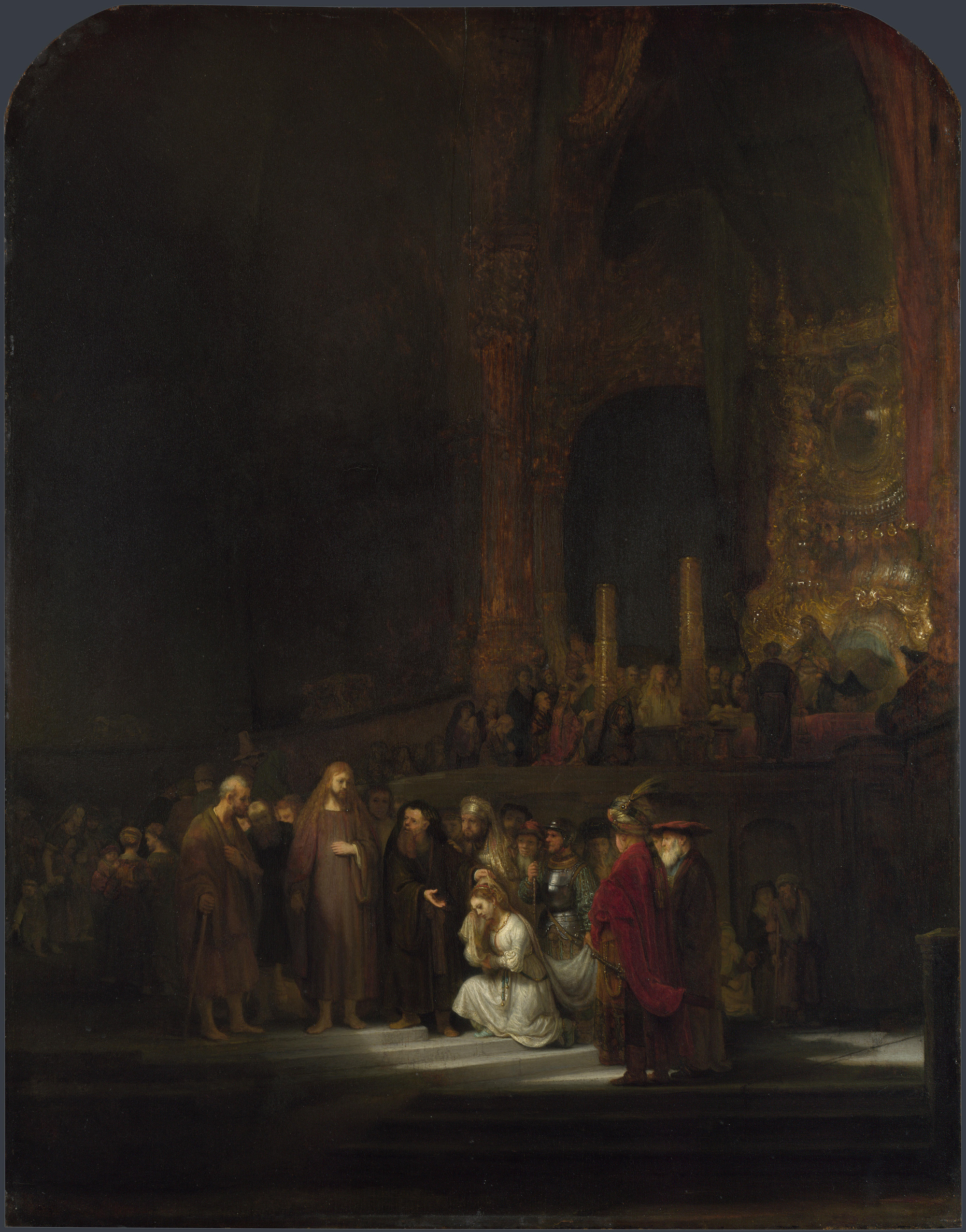
The Woman Taken in Adultery (1644) is one of Rembrandt's most celebrated biblical narrative paintings, demonstrating his exceptional storytelling ability and mastery of light. Housed in the National Gallery, London (one of its founding acquisitions in 1824), this oil on oak panel measures a relatively modest 83.8 x 65.4 cm. Despite its small scale, it suggests monumental space. The painting depicts the dramatic episode from the Gospel of John (8:1–11) where scribes and Pharisees bring a woman accused of adultery before Jesus, hoping to trap him into contradicting Mosaic Law (which mandated stoning). Rembrandt captures the pivotal moment before Christ delivers his famous verdict: "He that is without sin among you, let him first cast a stone at her." Unlike his earlier, physically dynamic baroque works, this painting (from his middle period) relies on psychological tension, stillness, and the symbolic use of light to convey its moral message. It contrasts the hypocrisy and grandeur of the religious establishment with the humility and compassion of Christ.