History o' Phoeart
  • Home

Nature

  • Overview
  • Landscape or Seascape in 2D
  • Animals in 2D or 3D
  • The Elements (Fire, Water, Wind or Earth) in 2D or 3D
  • The Relationship between Man/Woman and Nature in 2D or 3D

Identity

  • Overview
  • The Divine in 2D or 3D Works
  • Portraits in 2D Works
  • Portraits in 3D Works
  • Gender Identity in 2D or 3D Works

Renaissance

  • Overview
  • Religious Painting
  • Religious Sculpture
  • Mythological in 2D or 3D
  • Portraits in 2D or 3D

Baroque

  • Overview
  • Religious Painting
  • Religious Sculpture
  • Mythological Painting
  • Mythological Sculpture

About

A comprehensive study resource for Pearson Edexcel History of Art A-Level.

NatureIdentityRenaissanceBaroque

History o' Phoeart - A-Level Study Resource

Pearson Edexcel Specification • Use ⌘K to search

  1. Home
  2. Paper 1
  3. Identity
  4. Portraits in 2D Works
  5. The Byam Family
Paper 1Identity
Identity
The Divine in 2D or 3D Works
Portraits in 2D Works
Pre-1850
The Ambassadors

The Ambassadors

Hans Holbein

The Anatomy Lesson of Dr Tulp

The Anatomy Lesson of Dr Tulp

Rembrandt

The Byam Family

The Byam Family

Thomas Gainsborough

Post-1850
Portraits in 3D Works
Gender Identity in 2D or 3D Works
Ethnic Identity in 2D or 3D Works
Identity in Architectural Works

6 scopes • 24 artworks

The Byam Family

Thomas Gainsborough, 1761, 1766
IdentityPre-1850
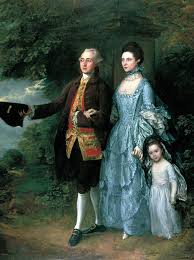
The Byam Family by Thomas Gainsborough
The Byam Family, Thomas Gainsborough, c. 1762–1766, oil on canvas, approximately 2.5m square, Holburne Museum, Bath

Overview

About This Work

The Byam Family (c. 1762–1766) is a monumental family portrait by Thomas Gainsborough, one of the leading painters of 18th-century Britain. Housed in the Holburne Museum, Bath (on long-term loan from the Andrew Brownsword Arts Foundation), the oil on canvas measures approximately 2.5 metres square, making it one of Gainsborough's largest and most ambitious works from his Bath period. It depicts George Byam, his wife Louisa, and their young daughter Selina taking a promenade in a stylized landscape. The painting is famous not only for its masterful "feathery" brushwork and integration of figures into landscape but also for its fascinating history of revision. Gainsborough originally painted the couple alone in roughly 1762 but reworked the canvas around 1766 to include their daughter and to update Louisa's dress to the latest fashion—a testament to the sitter's desire to project modernity and status. Historically, the work is significant for its connection to the transatlantic slave trade; George Byam's immense wealth derived from sugar plantations in Antigua, worked by enslaved people, a context that modern art history increasingly foregrounds.

Visual Analysis

Composition

The Promenade Portrait: The family is depicted "taking a turn" (walking) in the countryside, a popular genre known as the conversation piece or promenade portrait. This genre moved portraiture out of the stiff domestic interior and into the landscape, associating the British aristocracy with land ownership and "natural" liberty. Dominance of George Byam: George stands on the left, pointing confidently into the distance with his left hand while holding his hat in his right. His gesture directs the viewer's eye across the canvas and implies ownership of the land he surveys (even if the landscape is imaginary). His posture is relaxed yet commanding, occupying the foreground space. Louisa and Selina: Louisa walks beside him, her arm linked through his, signalling marital harmony and dependence. She gazes directly at the viewer with a gentle expression. The daughter, Selina (added later), holds her mother's hand, completing the family unit. The visual hierarchy places the man as the leader and protector, with the women as refined, decorative presence under his care. Integration with Landscape: Unlike his rival Joshua Reynolds, who often used classical backdrops, Gainsborough integrates his figures into a typically English (or idealized pastoral) landscape. The cloudy sky and soft foliage envelope the figures, creating a unified atmospheric effect.

Colour & Light

Fashion as Status: The clothing is rendered with extraordinary attention to texture, signalling wealth. George wears a gold-trimmed waistcoat and a brownish-red coat. Louisa wears a sumptuous pink/peach silk gown with elaborate lace ruffles and a structured bodice, painted with shimmering highlights that capture the sheen of satin. The "Feathery" Touch: The painting exemplifies Gainsborough's mature style—loose, rapid brushstrokes often described as "feathery" or "hatching." Instead of the smooth, enamel-like finish of continental painters, Gainsborough uses visible, energetic strokes to create vibration and life. This is particularly visible in the foliage and the diaphanous fabrics of Louisa's dress. Pastel Palette: The colour scheme is soft and harmonious, dominated by earth tones in the landscape and soft pastels (pinks, creams, golds) in the figures. This reflects the Rococo sensibility—lightness, elegance, and grace—that Gainsborough favoured over the heavy Baroque grandeur.

Materials & Technique

Evidence of Reworking (Pentimenti): The Added Daughter: Careful examination (and X-ray analysis) reveals that the daughter, Selina, was painted in later. The space between George and Louisa was originally empty or filled with landscape. Gainsborough had to subtly adjust the composition to fit her in, though the grouping remains natural. The Changing Dress: Louisa's dress was completely repainted. In the 1762 version, she likely wore a different style. By 1766, fashions had changed, and the family paid Gainsborough to update her costume to ensure she did not look "out of date" in their grand portrait. This reveals the portrait's function as a fashion statement and a marker of social currency.

Historical Context

Context

Bath Society: Gainsborough painted this while living in Bath (1759–1774), the most fashionable spa town in England. Bath attracted the wealthy elite—aristocrats, politicians, and colonial planters—who came for the season to socialize and be seen. Gainsborough's studio in Bath was a hub for this clientele, allowing him to charge high prices and secure prestigious commissions like this one. Colonial Wealth and Slavery: George Byam (1734–1779) was not an English landed aristocrat by birth but a member of the colonial elite. The Byam family were powerful planters in Antigua (West Indies), owning the "Parrs" and "Byams" sugar plantations. Their wealth—which paid for this portrait, the silks, and their lifestyle—was directly generated by the forced labour of hundreds of enslaved Africans. In 1763, the Byam plantation was worked by 132 enslaved people. This painting is a prime example of how colonial slavery funded the "polite" culture of Georgian England. The serene English landscape disguises the brutal Caribbean reality that funded it. The Marriage: The portrait commemorates the marriage of George Byam to Louisa Bathurst in 1761. Louisa was from a local gentry family (daughter of Peter Bathurst of Clarendon Park). For Byam, this marriage consolidated his status in English society, blending "new" colonial money with "old" English gentry lineage.

Key Themes

Identities (Gender, Class, Colonialism)

Constructing the English Gentleman: Despite his colonial origins, George Byam is presented as the quintessential English country squire. There are no visual references to Antigua, sugar, or trade. The portrait functions as an act of assimilation—visually cleansing the source of his wealth and grounding his identity in the English countryside. It asserts his right to belong to the British landed elite. The Ideal Family: The work projects the 18th-century ideal of the sentimental family. Unlike earlier, stiffer portraits of dynastic power, this shows the family as a unit of affection (holding hands, linking arms). It reflects the Enlightenment shift toward valuing domestic happiness and the "natural" bonds of husband, wife, and child (influenced by Rousseau). Gender Roles: The gender dynamics are explicit. George is the active agent (pointing, leading, hat in hand ready for action/greeting), while Louisa is the passive, aesthetic object (richly dressed, looking at the viewer, supported by her husband). She is displayed as a signifier of his wealth and success. Nature vs. Artifice: The Artificial Landscape: Although Gainsborough was a brilliant landscape painter, the background here is a studio invention—a "stage set" of nature rather than a specific location. The family is dressed in fine silks and satin shoes that are entirely unsuitable for a muddy country walk. This tension—between the "natural" setting and the highly artificial, fashionable dress—encapsulates the 18th-century paradox of the "polite landscape," where nature was tamed to serve as a backdrop for human vanity.

Exam Focus Points

Critical Perspectives

The "Invisible" History: For decades, art historians analyzed this painting purely in terms of style (brushwork, Rococo elegance) or biography (Gainsborough's time in Bath). Today, a critical reading must address the colonial context. The painting is a document of the British Empire; it shows the beneficiaries of the slave trade enjoying the fruits of that violence in polite English society. The absence of black figures (unlike in some other portraits of the era) is itself significant—a visual erasure of the labour that sustains the Byams. Portraiture as Performance: The reworking of the dress proves that the portrait was not a "snapshot" of reality but a carefully curated image meant to project a specific persona. The sitters were acutely aware of fashion as a language of power and demanded the painting be updated to maintain that power. Gainsborough vs. Reynolds: Use this work to contrast Gainsborough with Joshua Reynolds. Reynolds would likely have painted the Byams in classical robes, posing as mythological figures (the "Grand Manner") to give them timeless dignity. Gainsborough, by contrast, paints them in contemporary dress in a local landscape. He focuses on visual elegance and likeness rather than intellectual/classical allegory. He captures the shimmering surface of modern life rather than the weight of history.

On this page

OverviewVisual AnalysisHistorical ContextKey ThemesExam Focus Points